

“Arakan Army’s triumph ripples through China, India, Bangladesh” was published in Asia Times on February 20. AT said this article first appeared on Pacific Forum and was republished with permission.
He emphasized, “Just 15 years after its founding, the Arakan Army (AA) has swiftly risen to dominate Rakhine state in western Myanmar, controlling 15 of 17 key townships and over 90% of the territory, including the entire 271-kilometer border with Bangladesh.” This rapid ascent to power underscores the urgent need for strategic responses from neighboring countries.
Aung Thura previously worked at the Global Security Program at the University of Oxford and for USAID, Burma, for six years, liaising with the press and spearheading the Mission’s strategic public communication efforts.
Before joining USAID, he worked at the Myanmar Peace Center and Joint Ceasefire Monitoring Committee, providing insights, leading peace advocacy efforts through press conferences, publications, and public dialogue forums, and observing a series of peace negotiations between the Myanmar government and Ethnic Armed Organizations.
According to Aung Thura’s article, India and Bangladesh are Rakhine’s immediate neighbors and have a critical role in shaping the region’s future.
“For Bangladesh, the ongoing Rohingya crisis remains a pressing concern. Hosting over a million refugees has strained Dhaka’s resources and heightened domestic tensions,” Aung Thura wrote.
He mentioned, “In Cox’s Bazar, refugee camps have become recruitment grounds for armed groups, further complicating the conflict landscape. Reports of forced recruitment and promises of citizenship documents have drawn thousands of Rohingya into the military junta’s fold.”
The article said that by adopting a more flexible approach towards the AA, Bangladesh could explore new avenues for cooperation, such as establishing humanitarian corridors and addressing cross-border security issues.
“Dialogue with the AA could also pave the way for the voluntary and dignified repatriation of Rohingya refugees,” Aung Thura added.
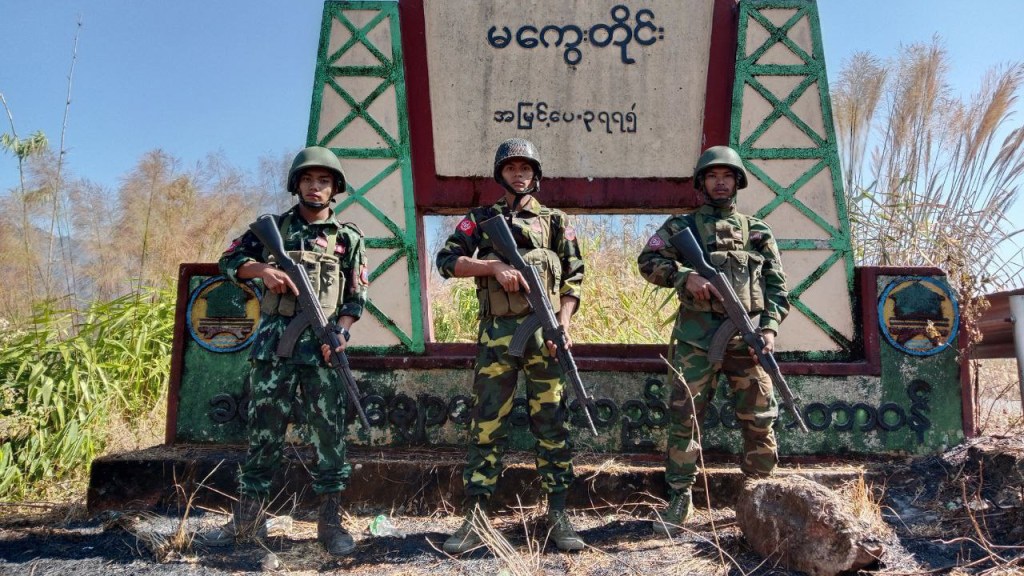
India and Bangladesh should recognize the AA’s de facto authority and engage with it as a key stakeholder in Rakhine. Such an approach could not only foster stability but also promote shared regional interests, offering a glimmer of hope in an otherwise complex geopolitical landscape.
India’s strategic initiatives, such as the Kaladan Multi-Modal Transit Transport Project, aim to enhance connectivity between its northeastern states and Southeast Asia.
Aung Thura wrote that Pragmatic collaboration would safeguard India’s investments and strengthen its influence in Rakhine. Additionally, India’s engagement could counterbalance China’s growing presence in the region.
“Since the launch of “Operation 1027,” anti-junta forces have taken control of 23 out of 34 Chinese-funded projects, with key areas affected, including Rakhine, northern Shan state, and the central lowlands,” the analyst mentioned.
According to the article, Rakhine state’s natural resources and strategic location along the Bay of Bengal have made it a focal point of China’s Belt and Road Initiative.
Key infrastructure projects, such as the Kyaukphyu deep-sea port and the Shwe gas pipeline, exemplify Beijing’s economic ambitions and geopolitical priorities in the region.
China has partnered with Myanmar’s junta to safeguard these investments and establish a joint security company.
The military junta, struggling to maintain its grip on power, has exploited divisions within Rakhine by recruiting fighters from Rohingya armed groups such as the Arakan Rohingya Salvation Army and the Rohingya Solidarity Organization.
These actions have deepened ethnic fault lines between the Rakhine Buddhist majority and the Rohingya Muslim minority, exacerbating mistrust and perpetuating cycles of violence.
Aung Thura Ko Ko stressed that regional actors, including Bangladesh and India, must collaborate to facilitate cross-border aid and address the acute needs of displaced populations.
This underscores the crucial role of regional cooperation in addressing the crisis.

 One-man Newsroom
Leave a comment