

Newsman, Bangladesh—On March 14, 2025, UN Secretary-General António Guterres and Nobel Peace Laureate Professor Muhammad Yunus visited Bangladesh’s sprawling Rohingya refugee camps.
Their visit became a defining moment for one of the world’s most pressing humanitarian crises, emphasizing urgent relief efforts and long-term solutions.
Over one million Rohingya refugees, displaced by decades of persecution in Myanmar, are living in overcrowded camps in Cox’s Bazar. Many fled violence in 2017 during what the UN described as a “textbook example of ethnic cleansing.”
Dependent entirely on aid, these stateless people face worsening conditions as global funding dwindles, creating an urgent need for immediate action.
The UN World Food Programme (WFP) has sounded the alarm on severe funding shortages. UNICEF, the UN agency for children, reports a worrying rise in severe malnutrition among Rohingya children.
Without an immediate injection of $81 million in funding, the crisis could spiral into catastrophic suffering, underscoring the urgent need for action.

“We are at a tipping point,” said António Guterres. “The announced cuts in financial assistance threaten lives. We must act now to prevent further suffering.”
Professor Yunus, renowned for his dedication to social justice, joined Guterres during this historic visit. He pledged to work with the UN to create conditions for the Rohingya to return home safely and with dignity.
“The Rohingya deserve to live with dignity in their homeland,” Yunus remarked. “Our goal is to create the conditions for their safe return. I hope that by next Eid, they can celebrate in their villages, surrounded by their loved ones.”
Mayyu Khan, a Rohingya linguistic and cultural activist and music lover now living in New Zealand, lauded Dr. Yunus’s compassionate leadership.
He wrote on Facebook, “I wish we had a leader whose positivity and gentle words touched hearts more than arrows. One such leader is Nobel laureate and head of state of Bangladesh, Dr. Muhammad Yunus.”
Mayyu highlighted Yunus’s unprecedented gesture of delivering a speech in the Chittagonian language, enabling the Rohingya to understand him more closely.
“He did so without worrying about state protocols or media scrutiny, ensuring the Rohingyas felt heard. May Allah grant him good health and a long life,” Mayyu added.
Bangladeshi rock star and communications expert Sina Hasan praised Yunus’s speech. He said, “Dr. Yunus’s speech at the Rohingya camp will top the list of the best speeches ever delivered by a Bangladeshi head of state.”
“It should be taught to international relations students worldwide,” he suggested.
Refugees Speak Out
The voices of the Rohingya community echoed strongly during that VVIP visit. Refugees shared their hopes for better living conditions and fears of an uncertain future. António Guterres summarized their key messages.
A Desire to Return Home: Refugees repeatedly emphasized their willingness to return to Myanmar, but only if their safety, rights, and citizenship are assured.
Urgent Need for Support: Facing immediate challenges, refugees appealed for sustained access to food, healthcare, and education.
As UN News reported, refugees spoke of their resilience, a testament to their strength in adversity. Their yearning for meaningful global support and a path to repatriation that guarantees dignity and safety is a call to action for the international community.
Voice of America (VOA) highlighted growing anxiety among the refugees, who rely entirely on aid and fear their struggles will worsen with the looming funding cuts.

BGB Accuses BSF of Border Killings; Joint Dhaka Talks Yield Commitments
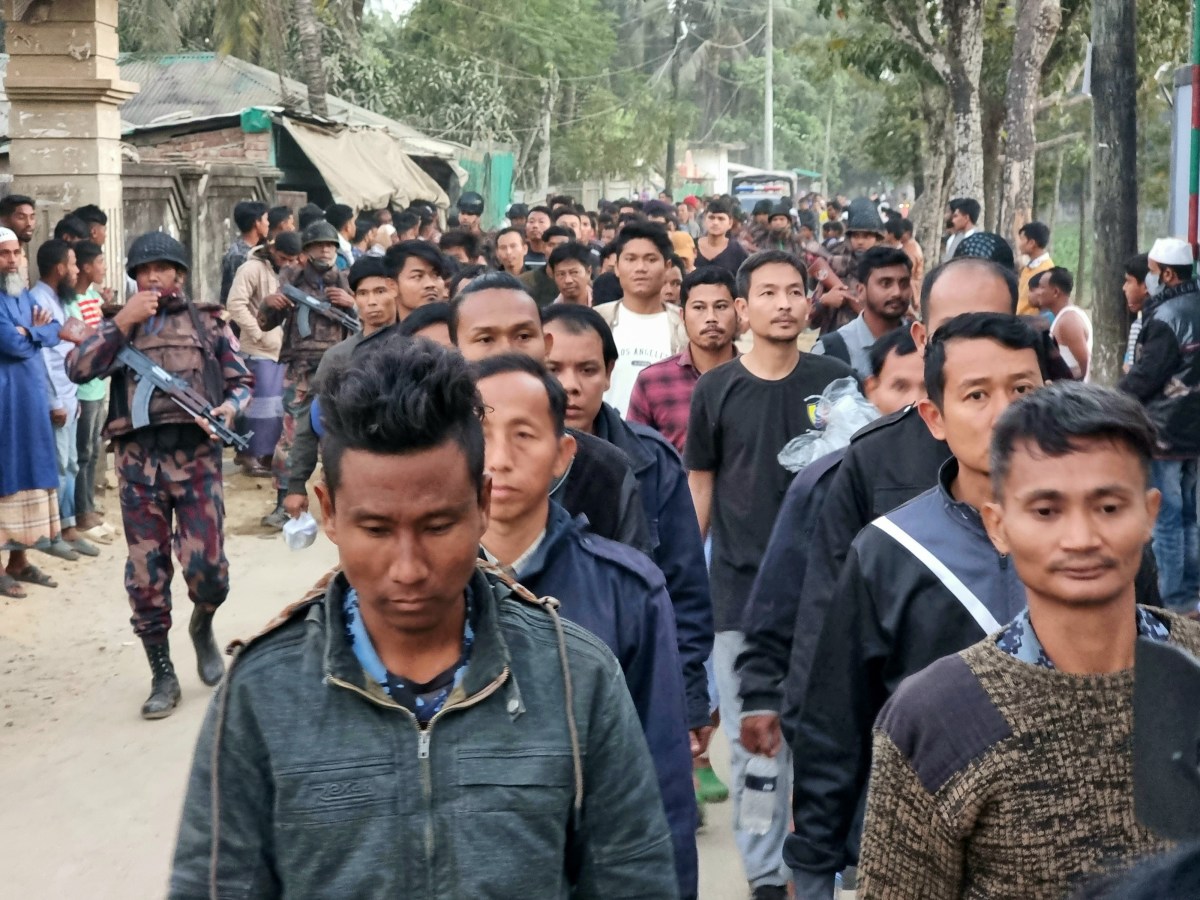
Bangladesh also protests illegal push-ins of Rohingyas.

Dhaka and Beijing Advocate the AA’s Role in Rakhine Peace
The rebels became crucial for the Rohingya’s repatriation.

Rohingya Voices Amplified at the Cox’s Bazar Conference
“We became refugees unwillingly. We never wanted this life.”
Abdur Rahman, a dedicated journalist from Cox’s Bazar, has been at the forefront of reporting on the struggles faced by Rohingya refugees for many years.
During a recent phone interview on March 15 with the One-man Newsroom, he captured a poignant moment and shared the sentiments of the Rohingya community.
“For the first time in a long while, they feel like the world hasn’t forgotten them,” he relayed, highlighting their deep yearning for recognition and support.
Major global outlets underlined the gravity of the Rohingya crisis. Reuters focused on the devastating impact of WFP’s proposed ration cuts and highlighted the urgent need for donor support.
The Independent quoted Guterres condemning the cuts as “a crime against humanity.” Learn more here. ABC News emphasized the $81 million funding gap as a looming humanitarian disaster.
Amid the hopeful visit, tragedy struck. A stampede broke out in the helipad area of the Ukhia refugee camp, resulting in the death of a 50-year-old man, Neamat Ullah, and injuries to two others.

The stampede resulted from overcrowding, highlighting the dire conditions in the camps. Experts warn that overcrowding and lawlessness in the camps continue to endanger lives.
Armed groups vying for control have intensified insecurity, highlighting the gravity of the situation and the urgent need for comprehensive solutions.
Decades of Displacement
The Rohingya crisis stems from Myanmar’s policies of systemic exclusion. In 1982, the Citizenship Law rendered the Rohingya stateless. Decades of military crackdowns culminated in 2017 when over 700,000 Rohingya fled to Bangladesh.
Efforts to repatriate refugees have repeatedly stalled due to Myanmar’s lack of guarantees for safety, citizenship, and rights. Ongoing political instability and international inaction have only prolonged their suffering.
António Guterres and Dr. Yunus’s visit has reignited international attention on the Rohingya crisis, underscoring the crucial role of global involvement in resolving this humanitarian catastrophe.
During a meeting with Bangladesh’s interim leader in Dhaka, Guterres expressed concern over the decision of Western nations to increase defense spending while humanitarian aid is being reduced globally.
“(Aid) cuts are a crime,” the UN chief was quoted as telling Yunus by the state-run Bangladesh Sangbad Sangstha (BSS).
Pressure must also increase on Myanmar to create safe, voluntary repatriation conditions. Meanwhile, support for Bangladesh remains vital as it bears the burden of hosting this displaced population.
This crisis tests the moral resolve of the international community. The world must collaborate to prevent further suffering and ensure the safe return of the Rohingya to their homeland.
 One-man Newsroom
Leave a comment