
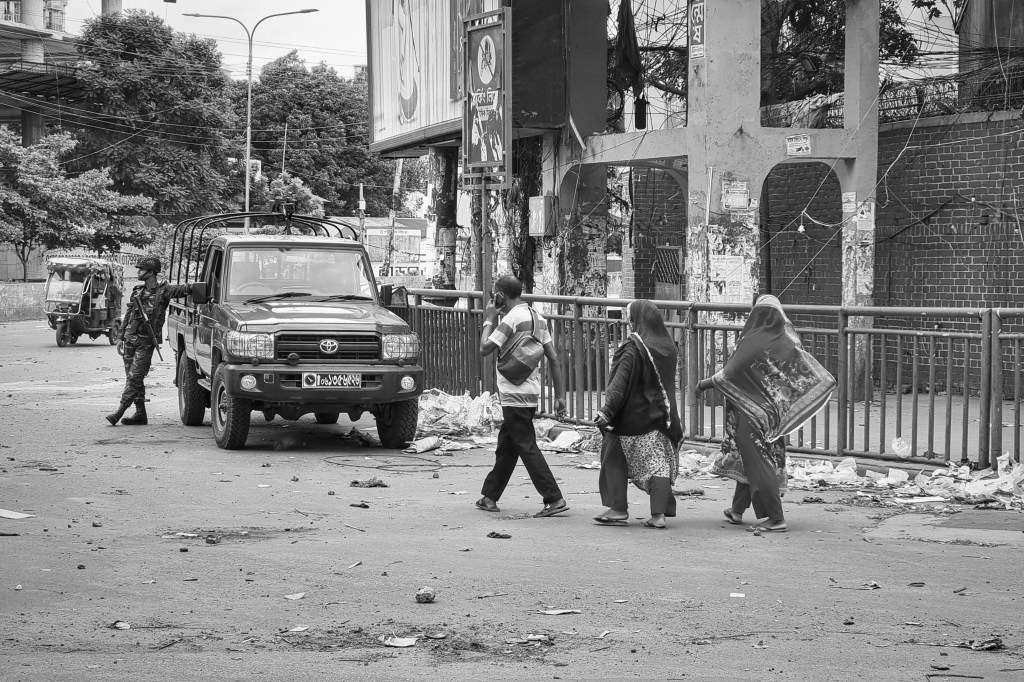
📷 Sharif Khiam Ahmed/Dhaka, Bangladesh/July 24, 2024
Newsman, Bangladesh
Bangladesh’s political landscape is at a defining juncture as the debate over the uncertain fate of the Awami League (AL) intensifies. Once an undisputed powerhouse, the party faces political oblivion following its dramatic fall in August 2024.
With allegations of mass killings, corruption, and authoritarianism casting a shadow over its legacy, the nation finds itself at a crossroads: should the Awami League be rehabilitated, or is its era over for good?
For over 15 years, the Awami League was the most dominant force in Bangladesh’s political sphere. But its rule came crashing down following the July 2024 mass killings.
This incident sparked violent protests and escalated into a national crisis. On August 5, 2024, Sheikh Hasina was forced to step down under immense domestic and international pressure.
The interim government, led by Nobel Laureate Dr. Muhammad Yunus, took over, vowing to restore democracy and hold those responsible for past crimes accountable. (The Bangladesh Awami League: From Dominance to a Legitimacy Crisis)
Since then, Bangladesh has been grappling with whether the Awami League should be allowed to return or consigned to history.
The Military’s Role in Political Engineering
A new controversy has erupted over allegations that Bangladesh’s military is attempting to influence political realignments. On March 21, 2025, Hasnat Abdullah, the Chief Organizer (South) of the National Citizen Party (NCP), accused the military of trying to engineer a “Refined Awami League” to maintain influence over national politics.
In a widely shared Facebook post, Abdullah warned, “We have full trust in the Bangladesh Army, but we won’t accept interference from the cantonment.” (Have complete trust in Bangladesh Army, won’t accept interference from cantonment: Hasnat)
“No one wishes to see the Awami League in politics any longer,” Abdullah stated. He further alleged that there is a covert plan to rehabilitate the AL under external influence, particularly pointing towards India’s involvement (Hasnat calls Army’s proposal to bring back ‘refined Awami League’ interference).
According to Abdullah, on March 11, 2025, at a private meeting in Dhaka, a senior military officer suggested that opposition parties should support a sanitized version of the Awami League.
“The moment I resisted, the conversation became tense. We were told that the alternative would be instability,” Abdullah told reporters. (Hasnat: Rehabilitating Awami League makes one an enemy of the people)
The army’s proposal has also sparked unrest among the student community. University students have organized protest rallies demanding a permanent ban on the Awami League.
These demonstrations reflect a broader sentiment among the youth, who played a pivotal role in the mass uprising that led to the AL’s ouster.
Adding fuel to the fire, a video surfaced featuring Adviser Asif Mahmud Shojib Bhuiyan claiming that General Waker-Uz-Zaman had reservations about appointing Muhammad Yunus as the Chief Adviser following the AL government’s fall.
This revelation has raised questions about the army’s internal dynamics and stance on the interim administration.
In a recent statement, Sarjis Alam, the NCP’s Chief Organizer (North), denied any ongoing conflict between his party and the Bangladesh Army.
Speaking to the press on March 22, 2025, Alam stated, “We have no conflict with the army. The Awami League has always respected the armed forces, and any suggestion otherwise is baseless.”
His remarks come amid growing tensions over the party’s future and allegations of military involvement in political maneuvering. (We have no conflict with the army: Sarjis Alam)
Political Divisions: Who Supports AL’s Return?
The Bangladesh Nationalist Party (BNP), historically AL’s arch-rival, has sent mixed signals about the party’s potential comeback.
At a press conference in Chattogram on March 20, 2025, BNP spokesperson Mirza Fakhrul Islam Alamgir stated, “We are not against any political party’s existence, but there must be justice. If the Awami League returns, it must be through democratic means, not through backroom deals.”
Another senior BNP leader was more blunt: “If the same corrupt figures try to rebrand themselves and return, the people will reject them.” (Bangladesh’s Political Landscape: BNP’s Stance on Awami League’s Return)
The interim government, led by Dr. Yunus, has largely remained neutral.
Chief Adviser has clarified that there are no plans to ban the Awami League as a party. However, individuals within its leadership accused of crimes, including murder and crimes against humanity, will face legal action.
Yunus’s balanced approach upholds justice while maintaining political pluralism (Bangladesh’s Political Landscape: BNP’s Stance on Awami League’s Return).
Many legal cases against former AL officials are still pending. Critics argue that without “meaningful trials, any return of the Awami League would betray justice. (Banning the Awami League: Controversies, Criticism, and Implications for Democracy in Bangladesh)
Public opinion in Bangladesh is divided regarding the Awami League’s future. For many, the party’s history of election rigging, human rights abuses, and suppression of dissent is seen as unforgivable.
However, others argue that banning the Awami League could create a political vacuum.

Remembering the F-7 Crash Victims: Time for Accountability
Milestone tragedy sparks urgent call to modernize air fleet.

The Road Ahead: Three Possible “Scenarios
A Fragmented Awami League: The party could split, with reformists breaking away to form a new political entity.
A Military-Endorsed Comeback: If the military continues to push for a rehabilitated AL, the party could return under new leadership.
Total Erasure: If legal and political opposition remains strong, the Awami League may fade into history, paving the way for new movements.
Bangladesh’s political future hangs in the balance. Will the Awami League be reborn, or will history close its chapter for good? As the debate rages on, one thing is clear: the decisions made in the coming months will shape the nation’s democracy for years.
References
- The Bangladesh Awami League: From Dominance to a Legitimacy Crisis
- Have complete trust in Bangladesh Army, won’t accept interference from cantonment: Hasnat
- Hasnat: Rehabilitating Awami League makes one an enemy nation of people
- Bangladesh’s Political Landscape: BNP’s Stance on Awami League’s Return
- Banning the Awami League: Controversies, Criticism, and Implicwon’ts for Democracy in Bangladesh
- Bangladesh’s Political Landscape: BNP’s Stance on Awami League’s Return
- We have no conflict with the army: Sarjis Alam
Bangladesh: Where the State Erased Its Critics
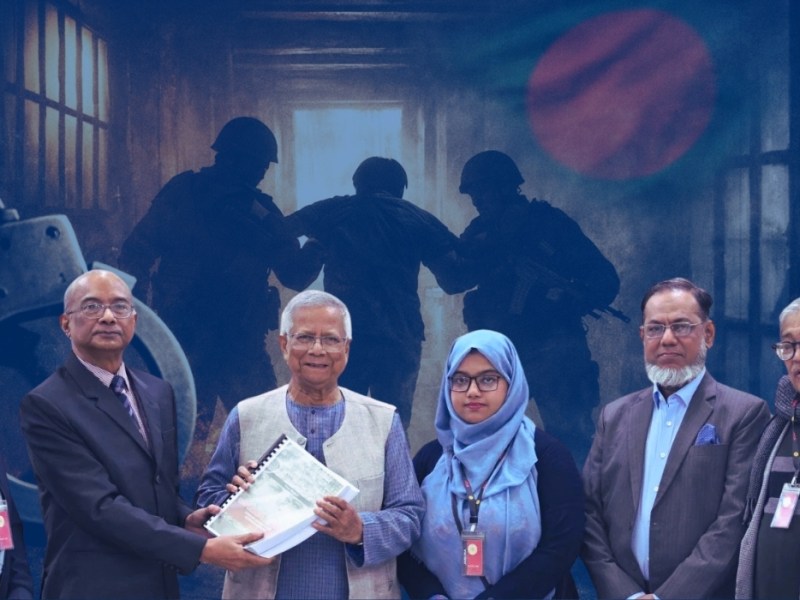
Enforced disappearances were systematic and politically motivated.
 One-man Newsroom
Leave a comment