
📷 Sharif Khiam Ahmed
Newsman, Bangladesh
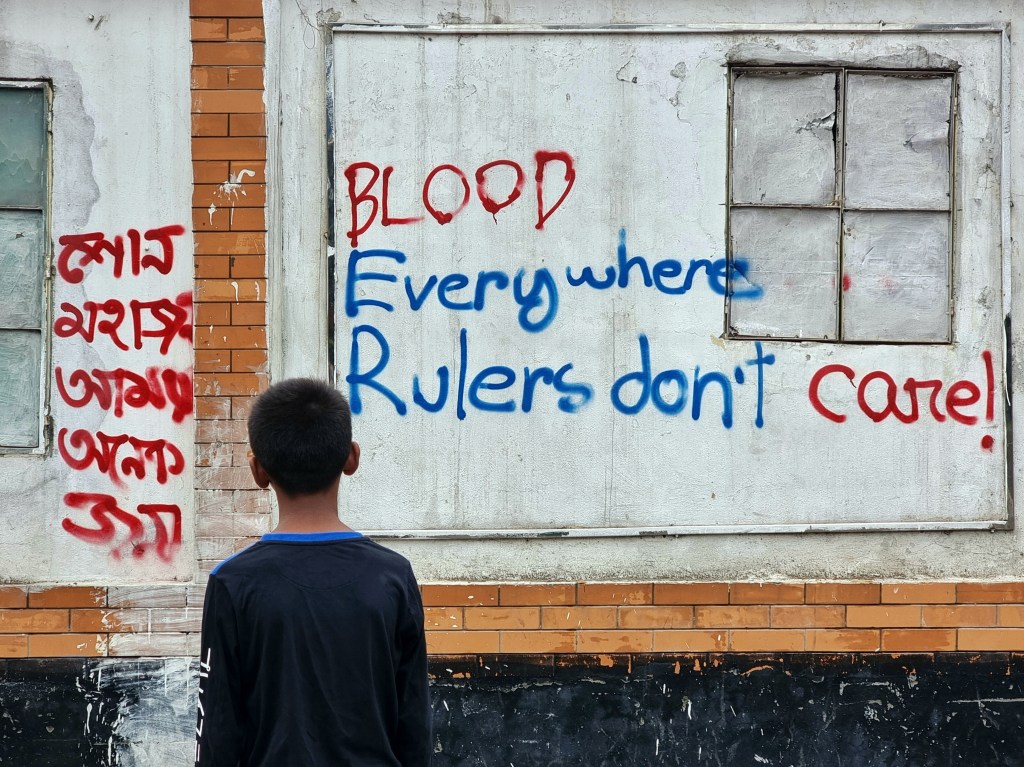
As Bangladesh embarks on a new political, social, and economic transformation chapter, multiple narratives have emerged regarding its future.
On the one hand, a New York Times article titled “As Bangladesh Reinvents Itself, Islamist Hard-Liners See an Opening” by Mujib Mashal and Saif Hasnat details dramatic incidents suggesting that extremist forces are reasserting influence in the wake of significant political change.
On the other hand, domestic officials and international commentators emphasize the nation’s resilience and progress.
Documenting Extremist Resurgence
The New York Times article offers a detailed account of a series of incidents that suggest a resurgence of extremist ideologies in Bangladesh.
The report includes several vivid descriptions, such as: “In the political vacuum that has emerged after the overthrow of Bangladesh’s authoritarian leader, religious fundamentalists in one town declared that young women could no longer play soccer. In another, they forced the police to free a man who had harassed a woman for not covering her hair in public, then draped him in garlands of flowers.”
Further emphasizing the extremism, the report also states: “Demonstrators at a rally in Dhaka, the capital, warned that if the government did not give the death penalty to anyone who disrespected Islam, they would carry out executions with their own hands.”
Another striking account from the article describes events in Taraganj:
“In the farming town of Taraganj, a group of organizers decided last month to hold a soccer match between two teams of young women. But as preparations got underway, a town mosque leader, Ashraf Ali, proclaimed that women and girls should not be allowed to play soccer.”
The article further reports on a broader ideological shift: “Officials across the political spectrum who are drafting a new Constitution acknowledged that the document was likely to drop secularism as a defining characteristic of Bangladesh, replacing it with pluralism and redrawing the country along more religious lines.”
These passages from the New York Times highlight a narrative centered on the re-emergence of religious extremism and its potential impact on social and cultural norms in a rapidly evolving nation.

BGB Accuses BSF of Border Killings; Joint Dhaka Talks Yield Commitments
Bangladesh also protests illegal push-ins of Rohingyas.


Bangladesh and India’s Tensions Amid Murshidabad Violence
Dhaka and Delhi Exchange Blame over Communal Unrest.
Shafiqul Alam’s Counter-Narrative
In response to the New York Times’ concerns, Shafiqul Alam, Press Secretary to the Chief Adviser of the Interim Government under Dr. Muhammad Yunus, issued a detailed rebuttal on Facebook.
His post titled “Rebuttal to ‘As Bangladesh Reinvents Itself, Islamist Hard-Liners See an Opening” includes several explicit statements and examples, such as:
“The New York Times article paints a troubling and one-sided view of Bangladesh, suggesting that the country is on the brink of being overtaken by religious extremism. This portrayal not only oversimplifies the political and social dynamics of the country but also risks unfairly smearing an entire nation of 180 million people.”
He further emphasizes the country’s progress by noting: “One significant example is the ‘Youth Festival 2025,’ where nearly 2.7 million girls from all corners of the country participated in 3,000 games and cultural activities. This widespread participation—across regions, marginalized communities, and even Indigenous youth—underscores women and girls’ thriving and dynamic engagement in Bangladesh’s social and cultural life.”
Alam’s detailed rebuttal also defends the role of Chief Adviser Dr. Muhammad Yunus. It clarifies the nature of the unrest, distinguishing between political violence and sectarian conflict.
His message insists that isolated extremist incidents do not define the nation’s broader narrative of resilience and progress.
Bergman’s Insights: Dual Perspectives
British investigative journalist David Bergman offers additional insights, providing a nuanced perspective that acknowledges both the positive developments and the serious challenges facing Bangladesh.
In a Facebook status, Bergman remarked: “Shafiqul Alam’s rebuttals against disinformation or exaggerated criticism are often excellent, but I think he will, in due course, look back at this particular rebuttal with a wince as the NYT article reflects a reality of post-August 5th contemporary Bangladesh, even though, of course, there are other more positive realities that also exist side by side. The article does not smear a population but describes a real trend that those who want to see a secular Bangladesh should be concerned about.”
Earlier, on X (formerly Twitter), Bergman also commented: “This NYTimes article is a generally fair representation of the resurgent Islamic religious forces in Bangladesh that have emerged in civil society since the fall of the Awami League government in August 2024 resulting from popular protests in response to a law enforcement crackdown on protests that killed over 1000 people. The interim government, under Muhammad Yunus, has certainly at times tried to push back – for example, about women’s football matches, and Yunus himself has spoken very strongly in support of women’s rights – but it has possibly not done so enough. The government is a mixed bag of political allegiances. In addition, it was inevitable, particularly after the over decade of serious repression by the Awami League government of the Jamaat-e-Islami, that with its fall, there would be a resurgence of the Jamaat along with its allied political forces. It is now up to those who support a more secular Bangladesh to raise their voices. However, those voices are now more silent as a significant proportion of those who supported a secular Bangladesh also supported the Awami League. And right now in the country, it is not easy for that cohort of people to be too politically vocal.”
Bergman’s observations from both platforms underscore the complexity of Bangladesh’s transformation. His remarks suggest that while the New York Times captures significant trends of rising extremism, the broader picture includes substantial progress and efforts toward inclusivity and economic growth.
One-man Newsroom Analysis: Multiple Realities
The varying narratives presented by the New York Times, Shafiqul Alam, and David Bergman reveal a multifaceted reality in Bangladesh.
On one hand, the New York Times provides a series of dramatic incidents that serve as cautionary signals about the influence of extremist ideologies. On the other hand, Shafiqul Alam’s detailed rebuttal emphasizes that these incidents are isolated and do not overshadow the nation’s significant achievements—such as the “Youth Festival 2025,” which saw the active participation of millions of young women.
David Bergman’s insights, which he shared on Facebook and X, add depth to the discussion. His acknowledgment that the New York Times article “clearly reflects a reality of post-August 5th contemporary Bangladesh” aligns with observations of rising extremist trends. At the same time, his recognition of the “other more positive realities that also exist side by side” highlights the country’s progress in other areas.
Collectively, these perspectives suggest that Bangladesh is navigating a complex transition. The resurgence of extremist rhetoric is a genuine concern for proponents of a secular Bangladesh.
Yet, the nation’s robust economic growth, cultural vibrancy, and commitment to democratic values continue to forge a path toward a more inclusive future.
Dhaka and Beijing Advocate the AA’s Role in Rakhine Peace
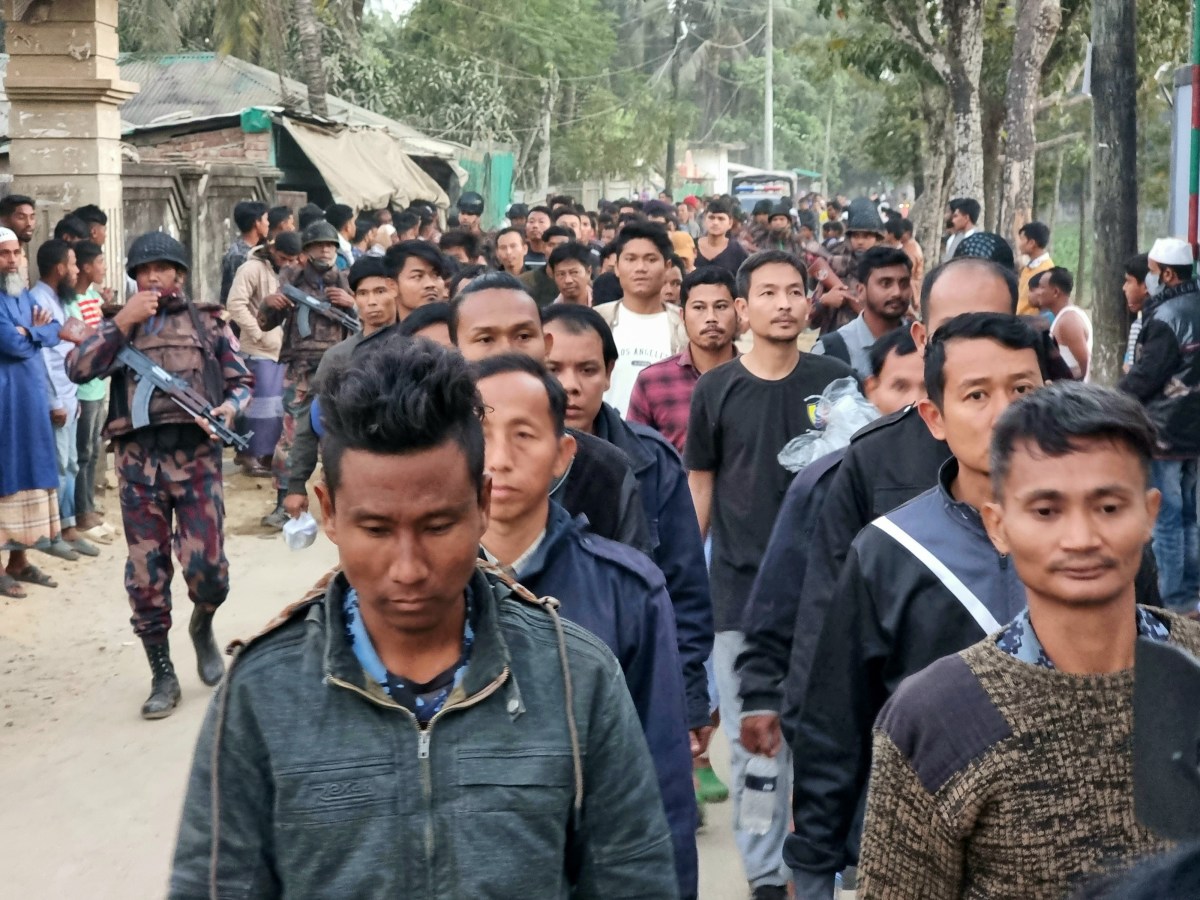
The rebels became crucial for the Rohingya’s repatriation.

Rohingya Voices Amplified at the Cox’s Bazar Conference
“We became refugees unwillingly. We never wanted this life.”
As Bangladesh continues its transformation, the challenge lies in balancing the need to address extremist influences while fostering the nation’s social, cultural, and economic progress.
The transitional government led by Dr. Muhammad Yunus aims to strengthen democratic institutions and law enforcement while protecting the rights of all citizens. These efforts have already garnered significant international investment and recognition.
Bangladesh represents both a dynamic opportunity and a complex challenge for global policymakers and investors.
Its economic indicators, such as nearly 12% export growth over the past seven months and a stable banking sector, contrast with the risks of emerging extremist trends.
The international community is closely monitoring these developments, recognizing that Bangladesh’s future will depend on its ability to reconcile tradition with modernity and ensure inclusive and sustainable progress.
Bangladesh stands at a critical crossroads—a nation marked by dramatic challenges and remarkable achievements—the New York Times article documents specific incidents highlighting the potential dangers of extremist influence.
Shafiqul Alam’s comprehensive rebuttal on Facebook and David Bergman’s balanced insights on Facebook and X reminds us that these events are part of a much larger and more complex narrative.
Bangladesh’s story is one of resilience, transformation, and balance. As the country continues to evolve, it must navigate the delicate interplay between confronting extremist challenges and harnessing the tremendous progress made in recent years.
For international observers, Bangladesh’s unfolding journey offers valuable insights into the challenges of national transformation in a globalized world.
 One-man Newsroom
Leave a comment