

📷 AI Assistants
Newsman, Bangladesh
Bangladesh’s interim Chief Adviser, Professor Dr. Muhammad Yunus, has made a significant move to change the country’s regional diplomacy. In just a few days, he met with key leaders from China and India, opening the door for new economic partnerships and strengthening democratic values in South Asia.
The meetings come as Bangladesh is recalibrating its international relations following political upheavals last year and amid growing regional concerns, including the longstanding Rohingya crisis.
In China, the discussions reportedly included the humanitarian situation of the Rohingya, with Chinese officials expressing willingness to support cooperative efforts for improved water and resource management.
Meanwhile, during the meeting with India, Prime Minister Modi underscored concerns regarding the safety of minority communities in Bangladesh, implicitly linking them to the broader regional instability stemming from issues like the Rohingya plight.
President Xi’s Bold Pledge
During his first bilateral visit to China since assuming office, Dr. Yunus met with President Xi Jinping. Xi’s remarks underscored Beijing’s willingness to adjust financial terms—potentially lowering interest rates on Chinese loans to Dhaka—and expand its investment footprint across sectors critical to Bangladesh’s development.
According to a Reuters report, “Bangladesh says Xi Jinping would consider lowering interest on Chinese loans” from China published on March 28, 2025, President Xi stated, “China is ready to work with Bangladesh to promote the high-quality building of the Belt and Road, explore cooperation in areas such as the digital economy, green economy, maritime economy, infrastructure construction, and water conservancy, and enhance humanistic exchanges to promote people-to-people contact.”
Discussions reportedly included cooperation in water resource management, an issue central to both nations and hints at initiating negotiations for a China–Bangladesh Free Trade Agreement, which could significantly boost trade and economic growth for both countries.
Mirza Fakhrul Islam Alamgir, General Secretary of the Bangladesh Nationalist Party (BNP), remarked, “During the previous Awami League government, China had maintained unilateral ties with a single party. However, with the change in government, China has also adjusted its approach.”
“China is a prosperous and the second largest trading country. China has promised to continue investing in Bangladesh’s business sector in the coming days. It’s undoubtedly hopeful for us,” he added.
Modi’s Reassuring Tone
On April 4, 2025, at the sideline of the Bay of Bengal Initiative for Multi-Sectoral Technical and Economic Cooperation (BIMSTEC) summit in Bangkok, Dr. Yunus met with Indian Prime Minister Narendra Modi. The Economic Times (India), in its report published on April 5, 2025, quoted Prime Minister Modi directly: “Any rhetoric that vitiates the environment is best avoided.”
The report, titled “Probe attacks on minorities, avoid rhetoric: PM Modi to Bangladesh chief adviser Yunus,” also said Prime Minister Narendra Modi reiterated India’s support for a democratic, stable, peaceful, progressive, and inclusive Bangladesh, and urged Bangladesh to investigate and prevent attacks on minority communities.
Bangladeshi media have also commented on the Indian engagement. State-run news agency BSS reported on it in two separate articles.
One flash report titled “CA enquires about Hasina’s extradition, calls for Teesta water sharing deal at a meeting with Modi” noted that: “Chief Adviser Yunus raised the issue of Hasina’s extradition and stressed the importance of a Teesta water sharing deal.”
Shafiqul Alam, Press Secretary to the Chief Adviser of the Interim Government, said in a Facebook post, “When Professor Yunus raised the extradition of Sheikh Hasina, the response was not negative.”
“We are confident, one day, Hasina will extradited to Dhaka, and we will watch the trial of the century,” he added.
“Also, it was clear that India wants to chart a new course in its relationships with Bangladesh. The Indian Prime Minister told Professor Yunus several times during the meeting that India’s relations are with the people of Bangladesh, not with any single party or individuals,” Shafiqul mentioned.
Another BSS report, “India doesn’t support any particular party in Bangladesh: Modi” (BSS, Bangladesh, April 4, 2025), cited Modi as saying, “India doesn’t support any particular party in Bangladesh.”
These direct quotes emphasize India’s commitment to ensuring stability and safeguarding minority rights in Bangladesh while maintaining a balanced bilateral relationship.
“This will undoubtedly benefit the people of Bangladesh and the people of India – the people of both countries,” the BNP secretary general said, replying to a question from reporters.
“It [this meeting] has created the possibility that the bitterness won’t escalate further, or it may subside,” he added.
One-man Newsroom Analysis
Dr. Yunus’s strategic engagements with President Xi Jinping and Prime Minister Narendra Modi underscore Bangladesh’s proactive approach to engaging all its significant neighbors.
These meetings are not just about diplomatic niceties but about securing economic development, political stability, and enhanced regional security for Bangladesh.
By engaging with Beijing on economic and infrastructural fronts and reaffirming ties with New Delhi, Bangladesh aims to secure a more autonomous and resilient regional stance.
Bangladesh sees this strategic balancing act as a critical move to secure economic development through Chinese investment while reinforcing its traditional ties with India on matters of democracy, security, and minority protection.
Issues such as border security, the Rohingya crisis, and sustainable water management remain at the forefront of regional diplomacy.
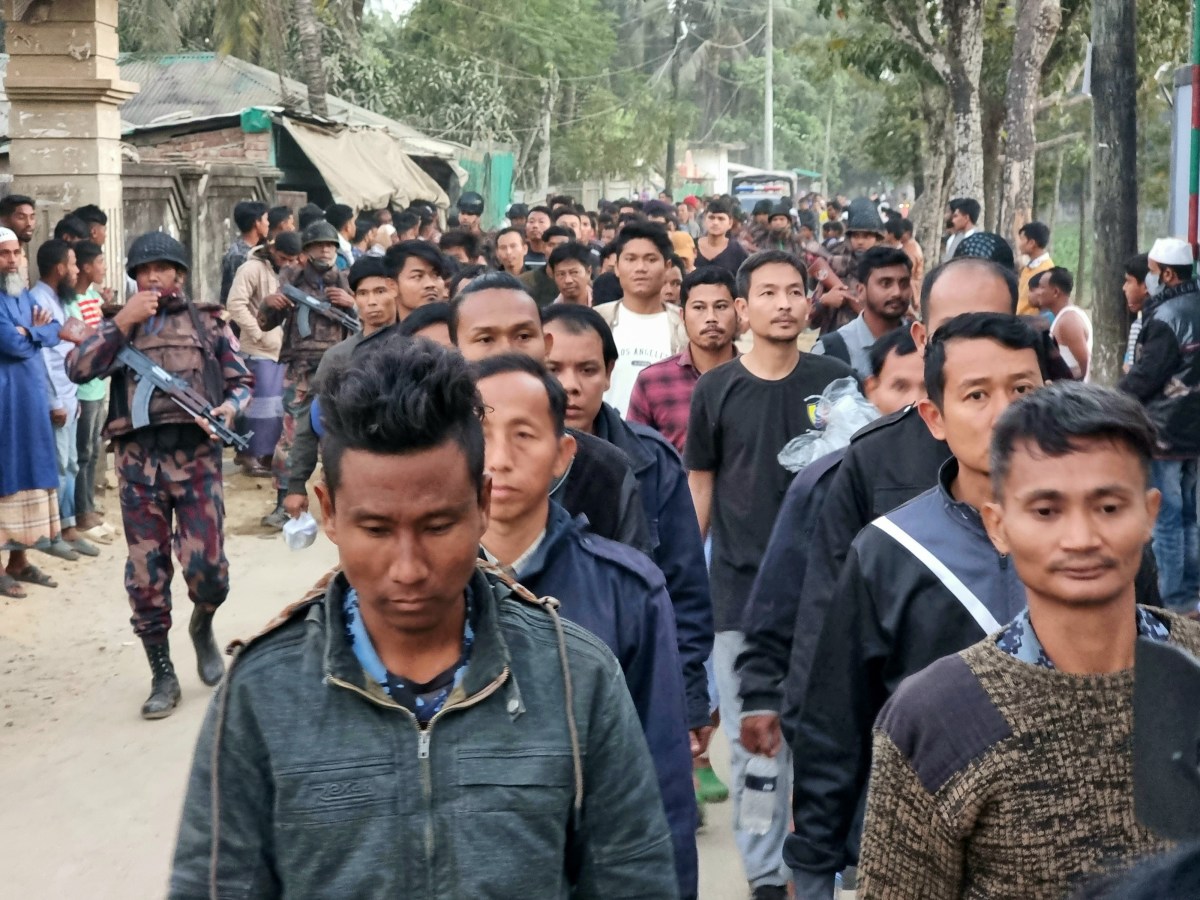
Dhaka and Beijing Advocate the AA’s Role in Rakhine Peace
The rebels became crucial for the Rohingya’s repatriation.


Rohingya Voices Amplified at the Cox’s Bazar Conference
“We became refugees unwillingly. We never wanted this life.”
 One-man Newsroom
Leave a comment