
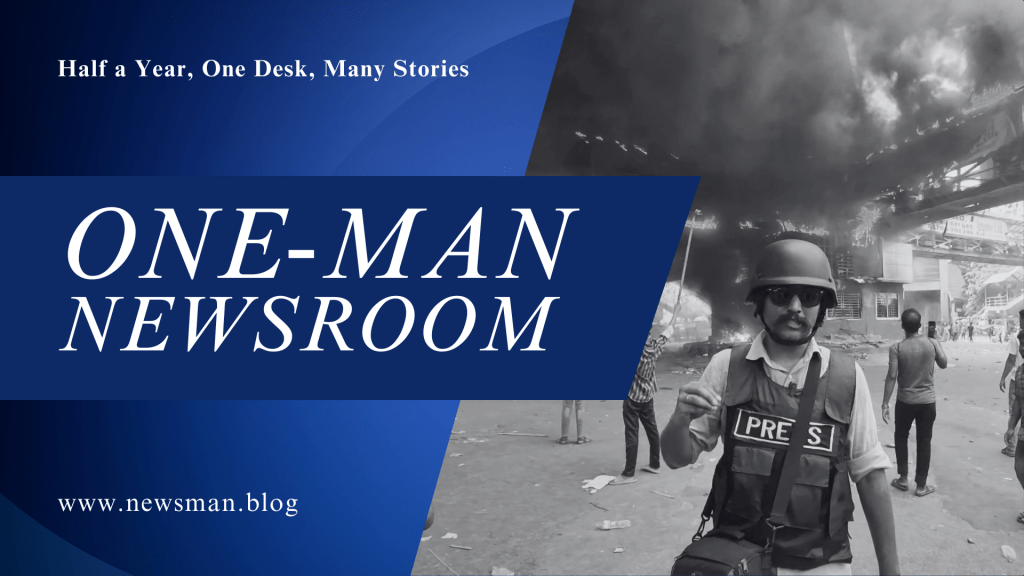
By Sharif Khiam Ahmed, Editor-in-Chief
On most days, the One-man Newsroom is quiet, except for the soft hum of a laptop fan, the shuffle of notepads, and the ping of incoming messages from sources scattered across Bangladesh and beyond.
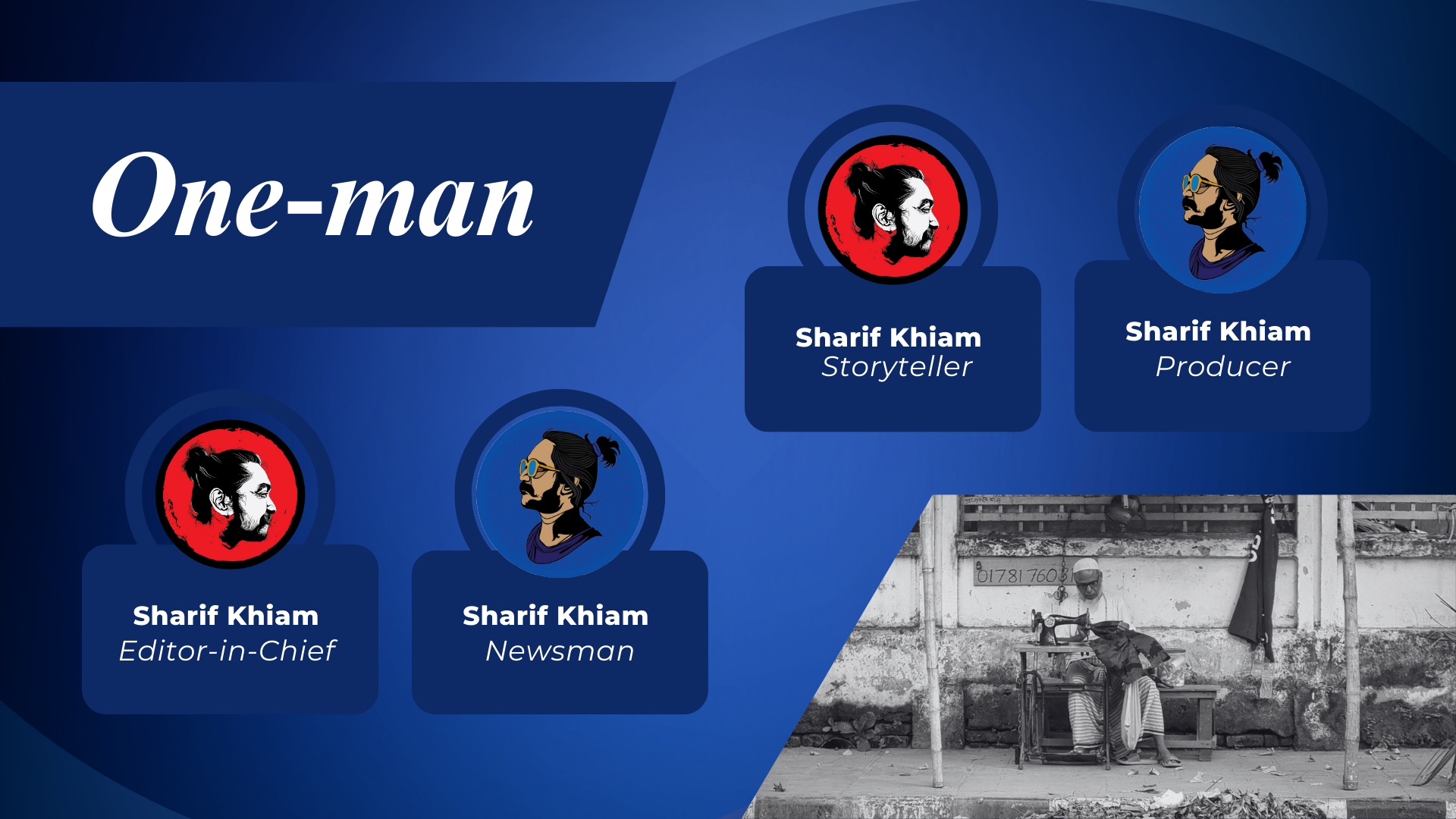
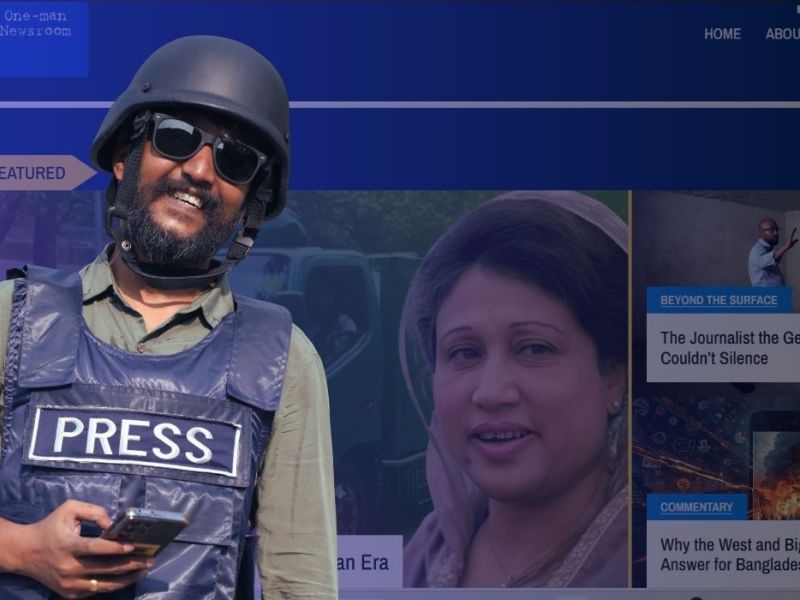
At this desk, there’s no bustling editorial team, no department heads, no boardroom meetings. There is just one journalist, who is responsible for chasing leads, editing stories, designing graphics, and publishing across multiple platforms.
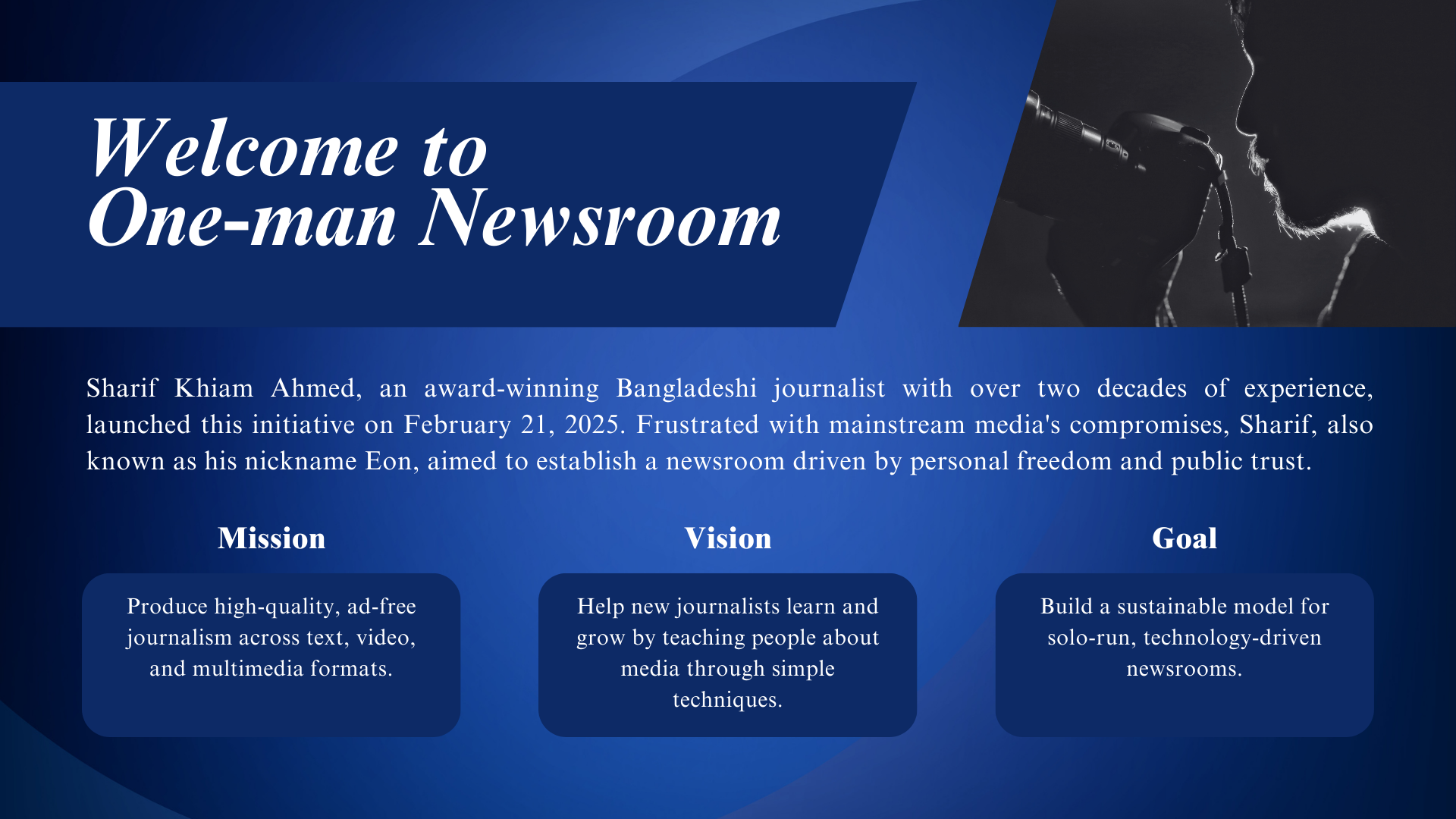
It all began on February 21, 2025, a date chosen with intention. On International Mother Language Day, I launched the One-man Newsroom as an experiment in independent, tech-enabled solo journalism.
Operates under the constitutional guarantee of personal freedom in Bangladesh, deliberately avoiding formal legal registration to preserve full editorial autonomy. All editorial and operational responsibilities are managed by a single journalist, ensuring complete editorial freedom and accountability.
It was an experiment with a question humbler than heroic: Can a single, principled journalist and ethical funding run a newsroom that consistently produces careful, public-interest journalism?
I wanted to know: could one person, armed with experience, skill, and the right tools, run a newsroom without surrendering to the compromises that often come with political or corporate patronage?
The answer, six months in, is a resounding yes. I’m not declaring victory; One-man Newsroom has only completed a pilot phase.
It was an exciting journey of technical experimentation, where One-man Newsroom dived deep into platform development, explored innovative formats, optimized workflows, and reached out strategically to engage our audience.
Each step was an opportunity to learn and refine my approach, laying a solid foundation for what was to come.
One-man Newsroom tested publishing pipelines, tried different short-form video formats, learned how to convert field material quickly into social-ready assets without sacrificing verification, and practiced commissioning local contributors under transparent contracts.
Those months taught One-man Newsroom what a solo operator can realistically sustain and where we must rely on trusted collaborators. They also made one thing plain: scale follows funding and structure. Without both, ambition becomes noise.
Scaling Ethical Solo Journalism: A Vision Rooted in Freedom
Now One-man Newsroom move from pilot to momentum. Practically, that means increasing our output: more text features, more short video stories, more photo-cards; all while preserving quality checks.
It’s plan to raise the cadence of production across platforms, leaning into formats that proved effective during the pilot. But let me be frank, this acceleration is conditional. Funding determines whether we can pay local fixers fairly, rent equipment when needed, provide honoraria to creatives, and hire editors or freelancers for critical tasks.
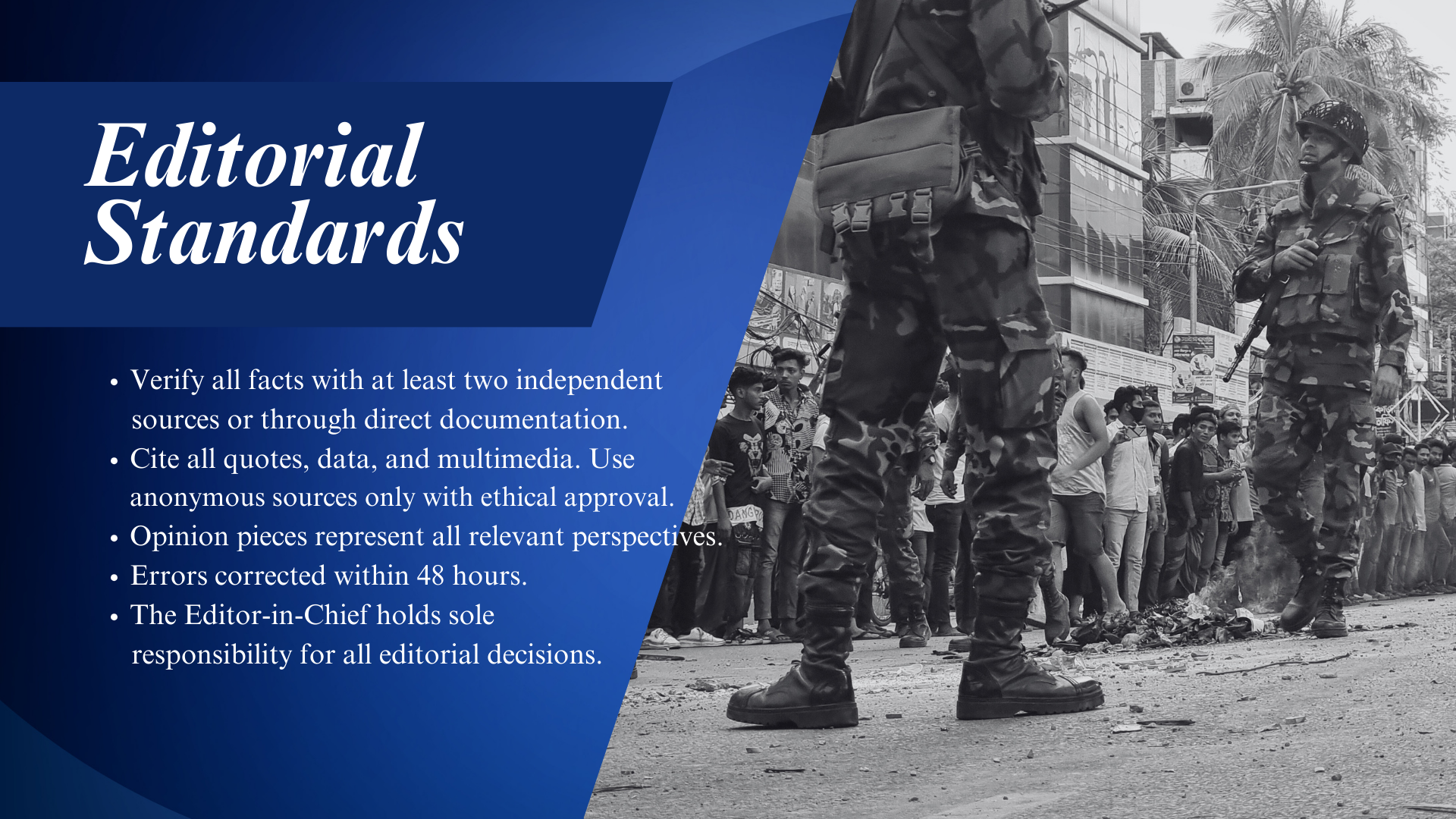
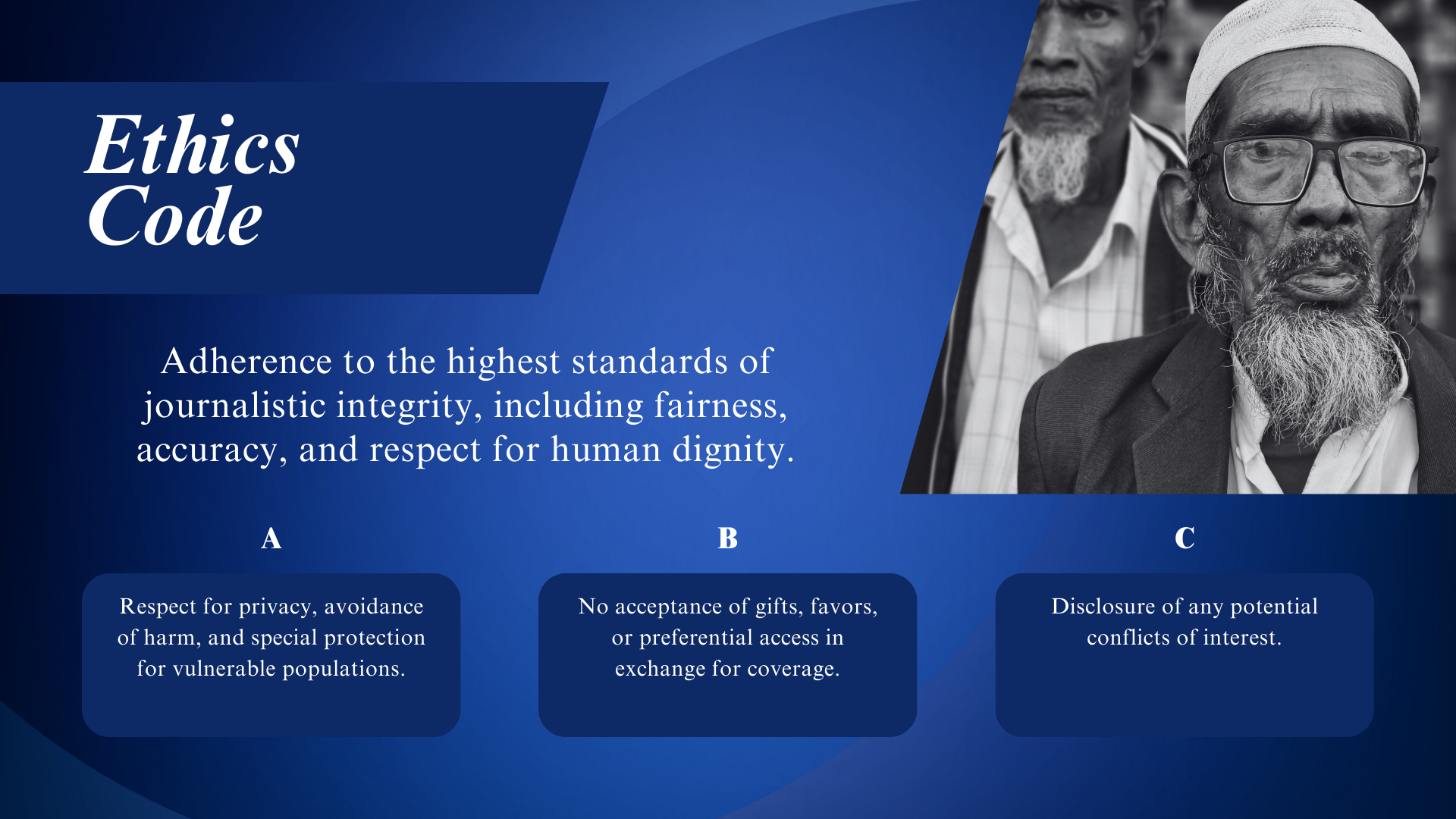
The editorial promise One-man Newsroom made at launch, namely, independence, ethical rigor, and fair pay, is not negotiable. It’s on a clear principle: journalism should be fearless, independent, and accountable to the public, not to advertisers or political benefactors.
There are trade-offs. Working lean means some projects take longer; some interviews require weeks of trust-building before a source will speak on record. That is not inefficiency; it is ethics in practice.
That’s why the first season of Khoborer Kherokhata, a non-fiction series on Bangladeshi journalism, is still being assembled. Several essential interviews remain incomplete, and we will not publish until those voices are recorded securely and with consent.

What is One-man Newsroom, and why it matters?
The One-Man Newsroom is proof that courage, technology, and commitment can still produce meaningful journalism without compromise.
That clear proof-of-concept is our news peg: in a media environment where commercial pressure and political interference mute reporting, a lean, donor-backed newsroom offers a replicable alternative.
The intimacy of the setup forces discipline; every story is planned, verified, and packaged for maximum reach. We chose an ad-free model to preserve editorial independence. This journalism aims to persist under scrutiny and elevate overlooked local voices.
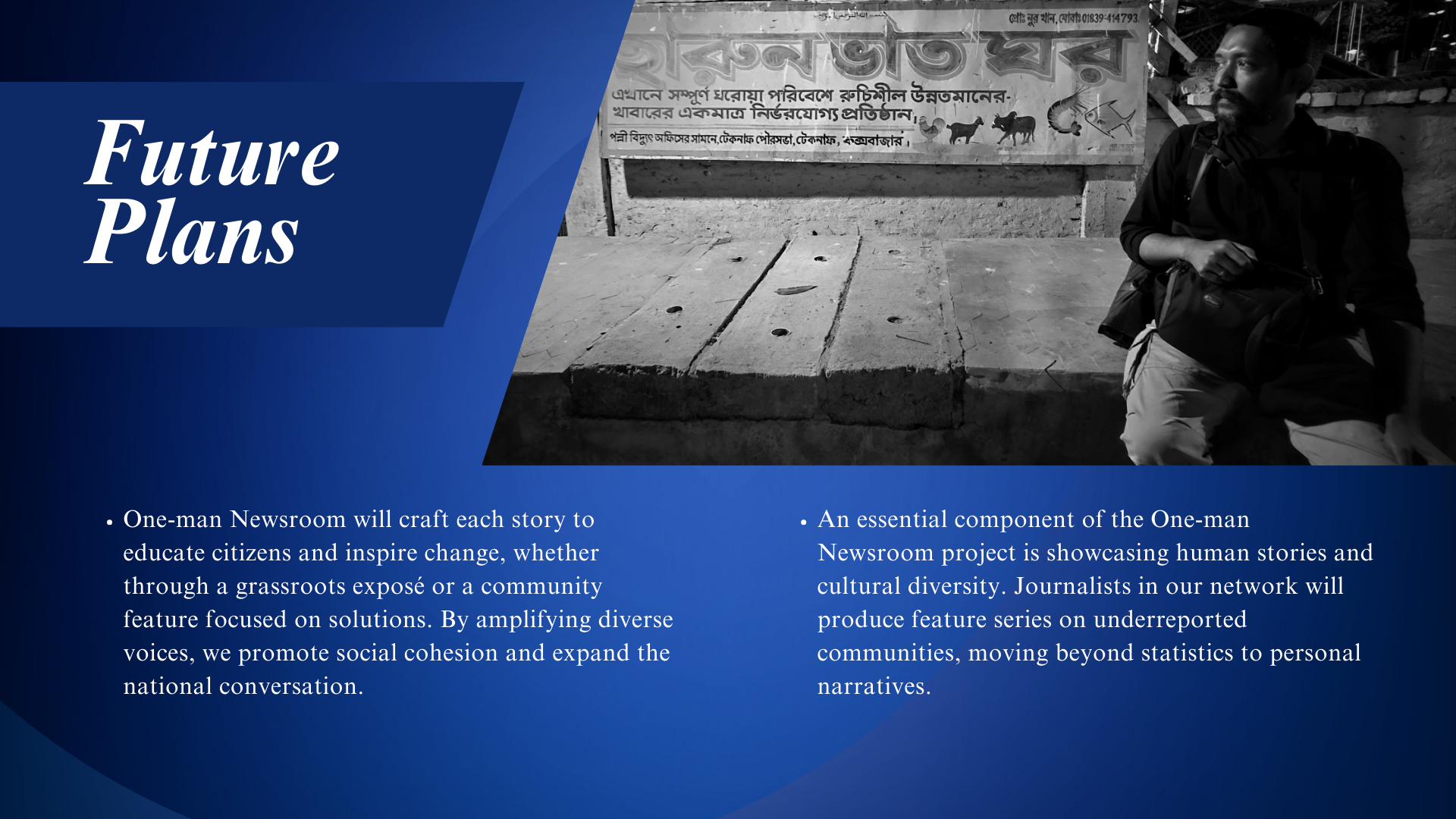
It will investigate human rights abuses, transnational crime, amplify grassroots voices, and mentor early-career journalists, all under one roof, albeit a small, solo-operated one.
In this model, the newsroom functions not only as a news blog or site but also as a social campaigner and educational platform.
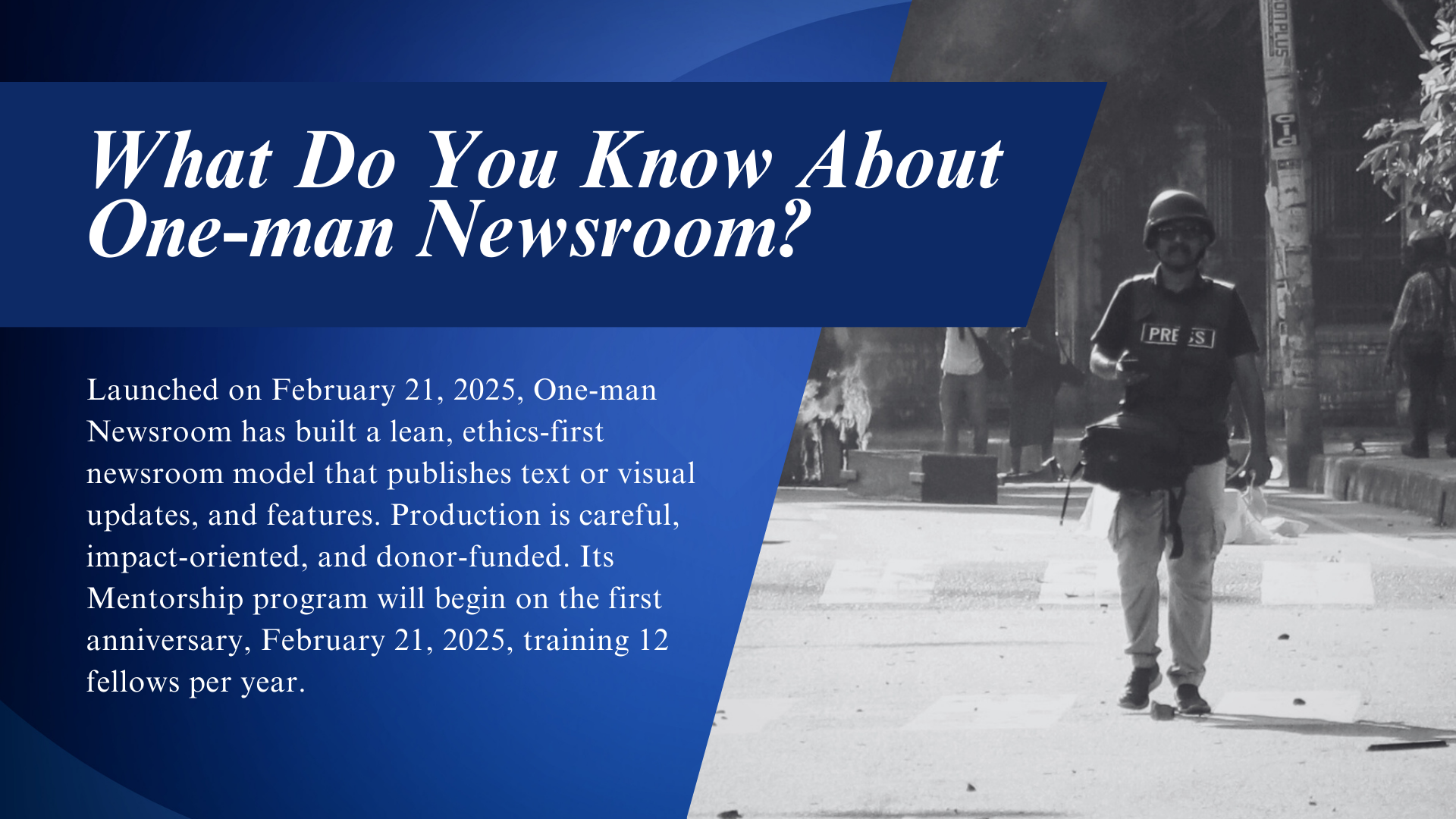
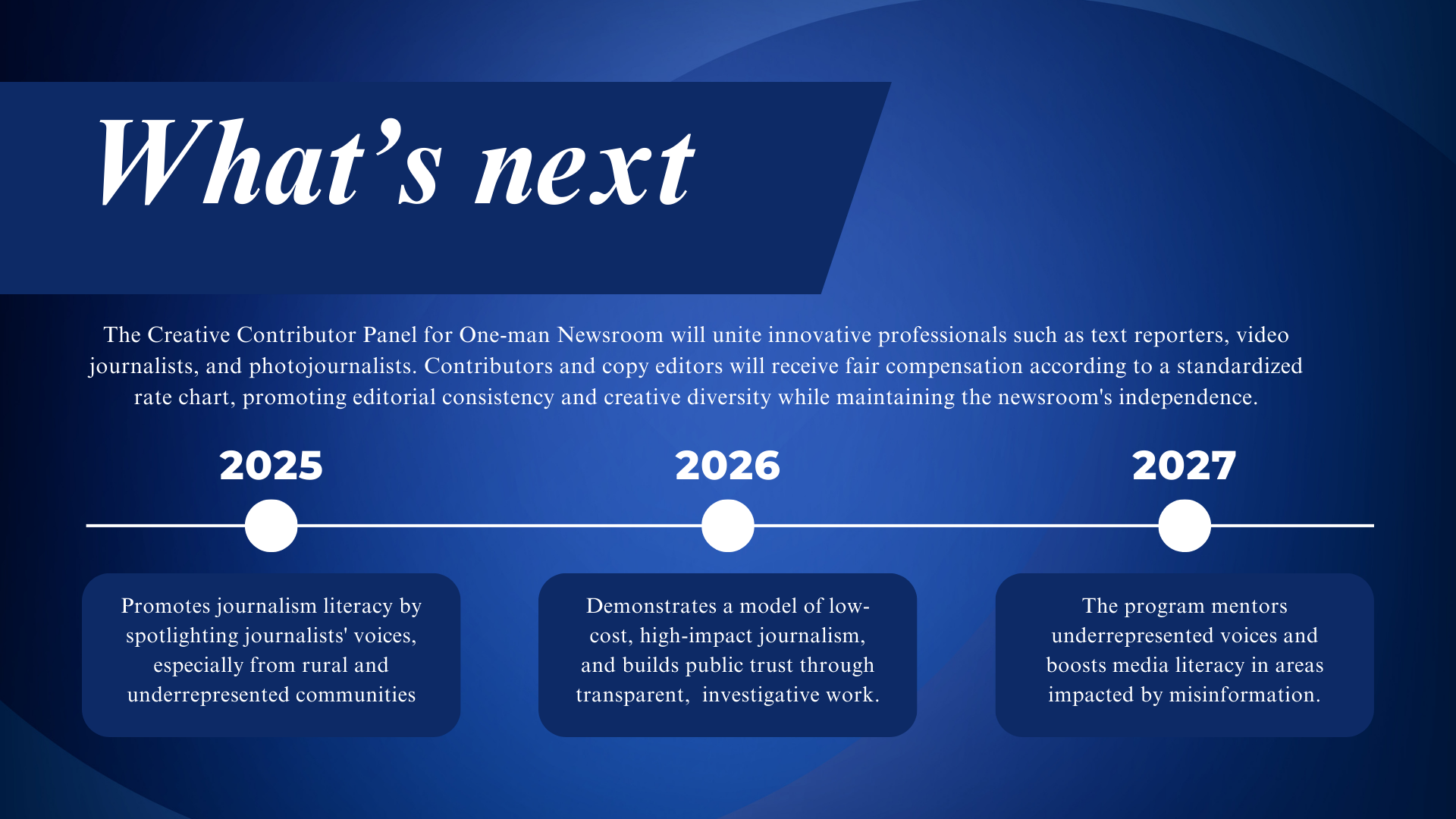
One-man Newsroom have improved a mentorship program. Starting on the first anniversary, we’ll mentor 12 early-career journalists each year, offering hands-on multimedia training and paid commissions.
A supervised apprenticeship model that focuses on quality over quantity. If funding allows, we will expand; if not, One-man Newsroom will maintain its standards.
Content will also be sourced from other journalists and creators on a commission basis, supporting a network of freelancers while maintaining centralized editorial control.
By operating without advertisements and outside formal corporate or party structures, One-Man Newsroom has been free to pursue the stories that matter most, often the ones others can’t or won’t cover.
The One-man Newsroom is small by design but ambitious in impact. If you’re an editor, funder, or fellow storyteller reading this, please note that the work One-man Newsroom will accelerate is public-facing and measurable.
One-man Newsroom will host community screenings and share data on its reach and engagement. It will increase our monthly outputs and publish impact reports.
So the newsroom continues; one desk, many stories, a widening circle of collaborators. We are moving faster, but not recklessly. We chase clarity, not speed; we pay contributors, not promises.
That decision affects how we commission work, acknowledge funders, and allocate donor funds for essential reporting costs (travel, local partners, honoraria, equipment, and post-production). The room is small enough that the day’s weather filters through the window.
A single laptop sits open among notebooks and a half-drunk cup of tea. Messages from sources buzz in different tones, a video file uploads, and somewhere, a photographer sends five frames that could be the lead image for tomorrow’s piece. It looks modest. It feels deliberate.
Whether a single person can sustain a newsroom for three years remains to be seen — that is the experiment. For now, we are building, learning, and asking for the support that would let us do more of what matters.
As we mark six months, I invite you to be part of this journey. Follow One-man Newsroom stories. The mission continues, because the truth can’t wait—one journalist, one newsroom, and a growing archive of stories that deserve an audience.


 One-man Newsroom
Leave a comment