

📷 Symbolic image/One-man Newsroom
The surge of mob violence in Bangladesh, characterized by attacks on media organizations, cultural institutions, political offices, and the intimidation of dissenting voices, can no longer be overlooked as mere spontaneous unrest. Increasing civic concern highlights the influence of online narratives amplified from abroad, particularly by two prominent anti-Hasina activists: Pinaki Bhattacharya and Elias Hossain.
Operating from exile, these individuals have had a profound impact on online discussions within Bangladesh. Their influence transcends simple criticism of the former government. Critics contend that their content consistently fosters animosity toward the nation’s Liberation War, its quest for independence, and the state’s foundational values. It, in turn, creates an environment where extremist and far-right narratives gain undue acceptance and legitimacy in society.
What is equally concerning is the pattern of targeting secular writers, journalists, artists, and activists. They are labeled as “agents of the Awami League” or “Indian collaborators” by Pinaki and Elias’s followers, and there are alarming calls for their execution or expulsion from the country.
This rhetoric not only undermines social cohesion but also threatens the principles of justice and inclusion we hold dear. This behavior does not represent free speech; it is organized intimidation and dehumanization. These online narratives have coincided with, and arguably fueled, physical attacks on political parties, cultural institutions, and media organizations.
Additionally, the rhetoric often violates basic diplomatic norms in its references to India, which further complicates Bangladesh’s foreign relations. Observers have raised concerns about content that seems to incite Islamist mobs against the military, representing a dangerous escalation in an already fragile political environment.
At the heart of this ecosystem are Facebook and YouTube, whose algorithms favor outrage, polarization, and persuasive rhetoric. It raises an unavoidable question: Are these platforms enforcing their own community standards in Bangladesh, or are they permitting violent narratives to thrive because they drive engagement?
The Bangladesh Telecommunications Regulatory Commission (BTRC) has requested that Meta take immediate action against violence-inciting content on Facebook, given the current political instability. In a letter to the Meta authorities on December 19, BTRC said, “We write to you during a critical period in Bangladesh, where ongoing political unrest has led to widespread violence and instability.”
Following a massive revolt in which over 1,400 students have died. Many more were injured. The country is in a difficult political transition, with an interim government attempting to restore order and prepare for legitimate national elections, the letter stated. The BTRC urged Meta to help prevent the spread of damaging information to restore peace and stability.
The recent (December 19) violence is not just political; it is an attack on the pluralistic values of Bangladesh. The targeting of secular writers and cultural institutions like Chhayanaut and Udichi Shilpigosthi suggests a coordinated effort to erase the foundational spirit of the 1971 Liberation War. When the “mob” becomes the judge, jury, and executioner, the rule of law is the first casualty.
Dhaka University students on December 10 burned effigies of Pinaki and Elias at the Raju Sculpture, denouncing them for spreading anti-liberation propaganda and glorifying ‘Razakars’ (collaborators of Pakistan) during Bangladesh’s month of victory.
Organizers said the protest was a moral duty to defend the dignity of the 1971 Liberation War, as both men, accused of ties to Jamaat-e-Islami and of inciting violence since the 2024 ouster of Sheikh Hasina, continue to enjoy impunity abroad while portraying militant leaders as “Islamic scholars.”
We must critically consider whether Western embassies in Dhaka are delivering a comprehensive and accurate assessment to Washington and Paris. Are they minimizing the influence of online incitement and digital radicalization in their official reports? This editorial appeals to US President Donald Trump, French President Emmanuel Macron, lawmakers, and civil society in both countries to pay attention.
Mark Zuckerberg of Meta and Sundar Pichai of Google/YouTube must also face this level of scrutiny. Are their companies conducting comprehensive risk assessments in local languages? Are they providing adequate human moderation in situations where online discourse could escalate into offline violence?
Mob violence in Bangladesh is not coincidental. It is a constructed reality, shaped by algorithms, amplified by exile-based influencers, and facilitated by international complacency. Ignoring this chain of responsibility will only ensure that the cycle of hatred and violence intensifies.
The international community must stop treating the digital incitement coming from the West as a byproduct of “free speech” and recognize it for what it is: transnational criminal negligence.
In the United States, where Elias Hossain operates, the First Amendment is being weaponized as a legal loophole to export chaos. While the landmark ruling in Brandenburg v. Ohio protects most speech, it explicitly denies protection to rhetoric that incites “imminent lawless action.”
When an influencer’s broadcast is followed, within hours, by a mob descending on a newspaper office or a cultural monument, the causality is undeniable. The US is allowing its territory to serve as a hub for digital attacks, offering sanctuary to those coordinating violence that would be felonies if aimed at American institutions.
France’s hypocrisy is equally glaring. While Paris prides itself on the law on the Freedom of the Press of 1881 and its stringent “Hate Speech” statutes that criminalize the provocation of hatred and violence, it remains inexplicably silent as Pinaki Bhattacharya uses French infrastructure to dehumanize secular voices and incite Islamist mobs in Bangladesh.
Under French law, inciting discrimination or violence carries heavy prison sentences and fines. Yet, these statutes seem to vanish when the victims are Bangladeshi journalists and artists. It is not a defense of liberty; it is a statutory failure that permits exile-based influencers to dismantle the social fabric of a sovereign nation with total impunity.
However, the legal paralysis of Washington and Paris is only half of the tragedy; the other half is the calculated indifference of Silicon Valley. This ecosystem of hate is engineered and monetized by Mark Zuckerberg of Meta and Sundar Pichai of Alphabet.
By failing to enforce their own “Violence and Incitement” policies in local languages, these CEOs have turned Facebook and YouTube into the primary delivery systems for the mob’s marching orders.
Zuckerberg and Pichai cannot continue to profit from Bangladeshi engagement while outsourcing the resulting bloodshed and fire to a nation in transition. The responsibility for the next burned building or the next silenced writer lies not just with the influencers in the West, but with the tech giants and governments who provide the fuel and the match.
The recent joint statement by the Media Freedom Coalition (MFC)—a group including France, Canada, Germany, and the UK—rightly condemned the barbaric attacks on Bangladeshi journalists and media houses, asserting that such violence strikes at the heart of democratic values and the public’s right to be informed.
However, a glaring diplomatic irony remains while France is a leading signatory to this statement, its soil also serves as a sanctuary for influencers like Pinaki Bhattacharya, whose digital rhetoric often brands these very journalists as “agents” or “traitors,” effectively inciting the mobs that carry out these assaults.
Genuine commitment to press freedom goes beyond mere condemnation; it requires host countries to take responsibility when their jurisdictions enable “digital incitement” that leads to physical violence elsewhere.
This responsibility also falls heavily on the incoming US envoy, Brent Christensen, whose appointment comes at a pivotal moment for Bangladesh’s stability.
As Christensen prepares to lead the US mission in Dhaka, his mandate must extend beyond reporting on domestic political developments to addressing the “digital pipeline” of hatred exported from the US by figures like Elias Hossain.
For Western embassies in Dhaka to maintain their credibility as defenders of human rights, they must move beyond hollow statements and ensure that their nations do not serve as command centers for digital radicalization.
The quest for a stable, democratic Bangladesh cannot succeed as long as international complacency allows overseas influencers to weaponize Western liberties to destroy the social fabric of a nation in transition.
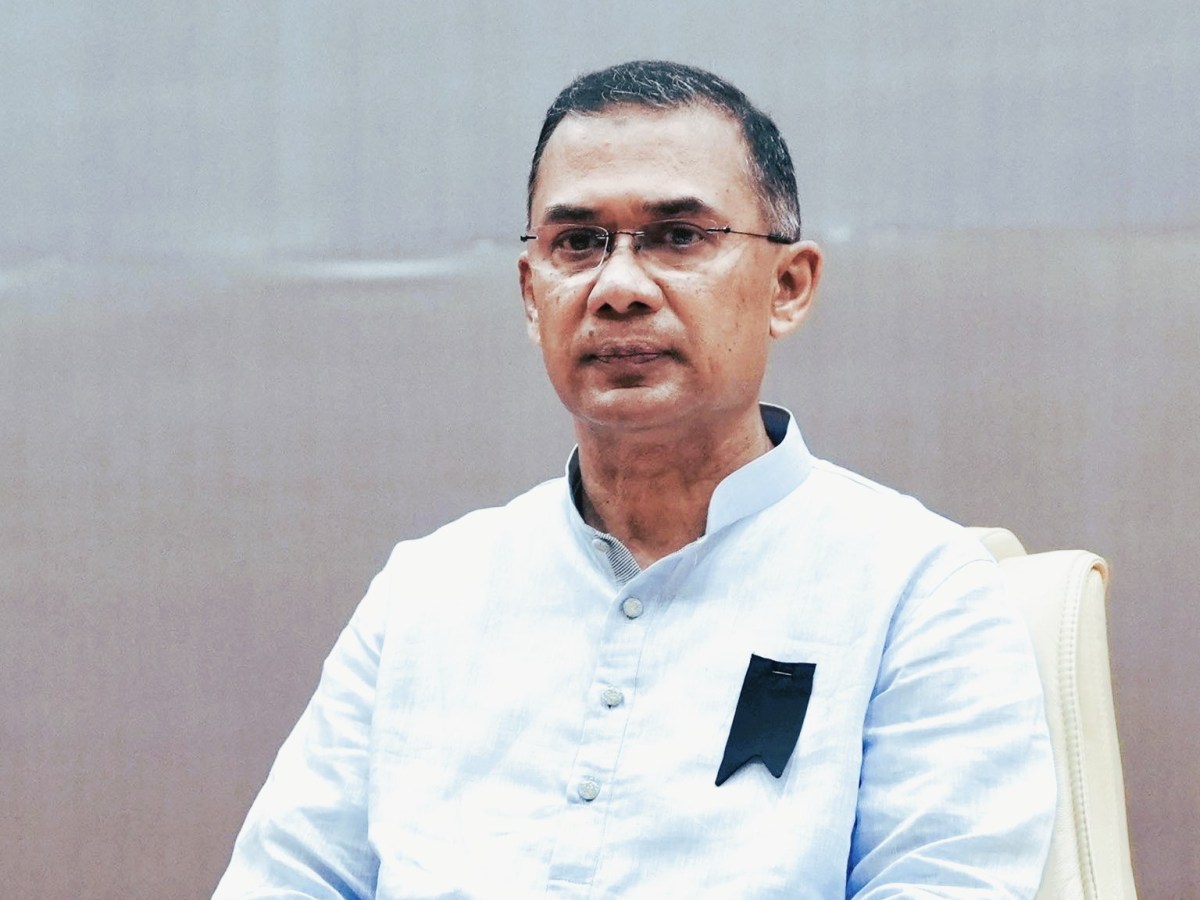
Dhaka Urges Restraint as Mideast War Escalates
PM Tarique Rahman leads double crisis response.
 One-man Newsroom
Leave a comment