
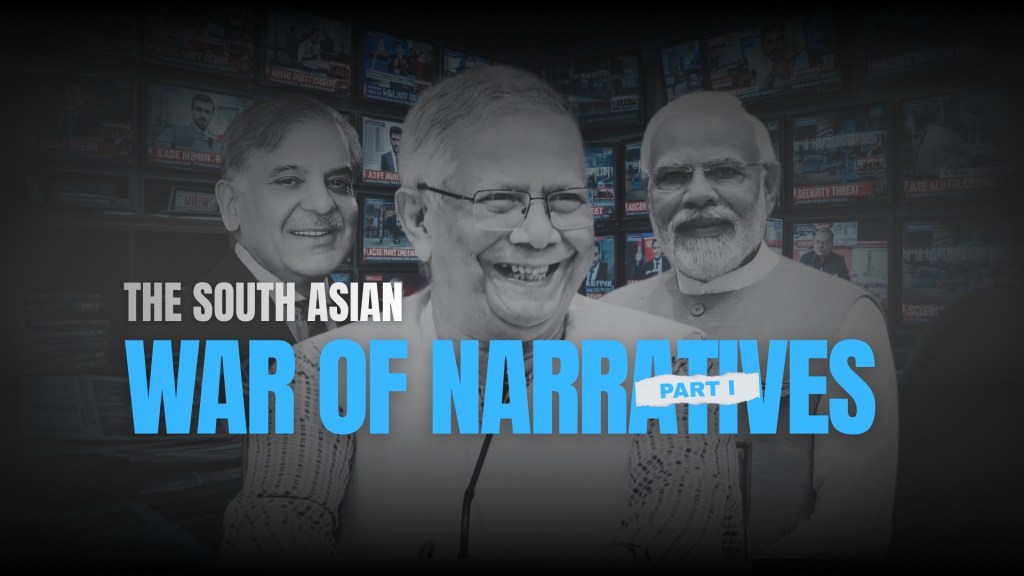
📷 One-man Newsroom Collage
In recent years, Bangladesh, a Muslim-majority state bordering China’s geostrategic periphery, has witnessed the sharp rise of anti-India sentiment. A Gen-Z student-led mass protest ended the pro-India Awami League (AL)’s long rule, leading to former Prime Minister Sheikh Hasina fleeing to India for refuge.
Atanu Singha, a poet and journalist working for a Bengali daily in Kolkata, India, told One-man Newsroom, “After the AL fell, it felt as though India had lost a colony, a political territory where it could exert influence and control, much like a zamindari. India suffered significant losses, marking a decline in governance and authority in that region. Since August 5, 2024, their responses and sentiments have consistently reflected this sense of loss.”
On that day, India offered refuge to Sheikh Hasina following the ousting of the Awami League government during a mass uprising. From that moment on, relations between New Delhi and the interim government, led by Bangladesh’s only Nobel laureate, Dr. Muhammad Yunus, never fully normalized.
“Indian politics, particularly the politics of the central ruling class, has transformed Bangladesh into a colony through the AL. In this arrangement, Bangladesh was effectively given as a zamindari to the AL, establishing a ruling class there,” Atanu added, “This ruling class has operated in ways that benefit either itself or its interests in Delhi. This political mentality has been prevalent within the central ruling class of India, and the mainstream media, which we refer to as ‘Godi’ (pro-ruling party) media, has naturally reflected these political perspectives.”
Bangladesh formally objected to a wide range of Indian media reports regarding the fall of the Hasina government, her flight to India, the formation of the Yunus-led cabinet three days later, and the subsequent events. Protest notes were issued at various points by the Chief Advisor’s Office (CAO), the Bangladesh Army, and the Ministry of Foreign Affairs.
Speaking at the 2025 World Press Freedom Day event on May 3, Shafiqul Alam, press secretary to Chief Adviser (CA) Professor Muhammad Yunus, criticized Indian coverage during a panel hosted by Bangladesh Journalists in International Media (BJIM). “The behavior of the Indian media has been deplorable,” he said. “From day one, they have tried to establish a narrative that there has been some kind of Islamist takeover in Bangladesh, with Professor Yunus portrayed as a ‘chief Taliban’. They are trying to stabilize that narrative aggressively.”
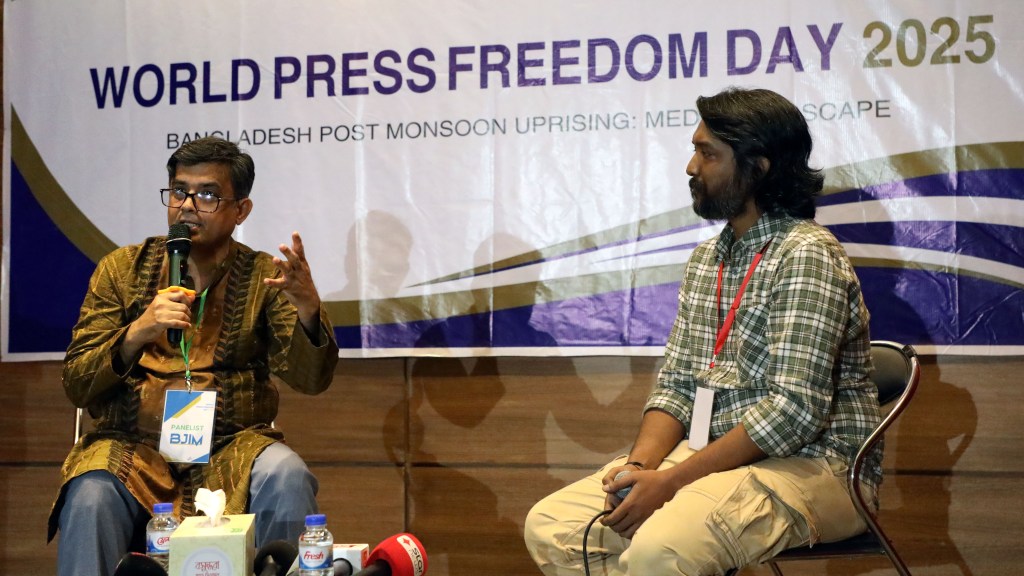
Shafiqul Alam and this reporter, during the 2025 World Press Freedom Day event on May 3.
Alam added, “Earlier, I thought this was the domain of very poor-quality media from India, like Northeast News, which is full of misinformation. But now we see outlets we grew up respecting, like the Times of India, among others, are part of it too. It is a well-orchestrated campaign against Bangladesh, aimed at delegitimizing the July–August uprising. In this case, the interests of sections of the Indian media and the AL have converged.”
The interim government led by Bangladesh’s only Nobel laureate, Dr. Muhammad Yunus, was formed with the backing of Western governments. However, they are building closer ties with China and Pakistan, which understandably alarms New Delhi, especially as Bangladesh strengthens its military collaboration with these two nuclear-armed nations.
In response to Bangladesh’s military modernization with support from these countries, India’s Army Chief, General Upendra Dwivedi, stated that capability development is a routine process for all nations and emphasized that India will continue to monitor the situation closely.
Bangladesh is pursuing a government-to-government deal with China to set up a military drone manufacturing plant, aimed at enhancing the Air Force’s indigenous capabilities through technology transfer. At the same time, Bangladesh and Pakistan officials discussed the potential purchase of JF-17 Thunder fighter jets.
During the January 13, 2026, press conference, General Upendra Dwivedi emphasized that drone tensions remain a security concern in South Asia and urged neighboring countries to curb unauthorized drone activity.
In the meantime, right-wing Islamist groups that support Pakistan are becoming more prominent in Bangladesh. In contrast, Hindus and those aligned with the Awami League or left wing are often called ‘agents of Delhi’ by pro-Pakistani groups.
In December 2025, India–Bangladesh relations plunged into one of their most volatile phases in decades, as the targeted shooting of an anti-Indian youth leader, Sharif Osman Hadi, in Dhaka and the horrific lynching of Hindu garment worker Dipu Chandra Das in Mymensingh, both incidents captured in viral social media videos, ignited a storm of outrage across the region.
Within days, extremist groups on both sides attacked diplomatic premises, forcing missions to shut visa centers and summon envoys. By early 2026, India–Bangladesh relations and South Asia’s wider diplomatic environment had entered a period of volatility that many observers now believe is becoming difficult to contain.
In the first week of January, the Bangladesh Cricket Board (BCB) decided not to send its national team to India for the T20 World Cup, after Bangladeshi cricketer Mustafizur Rahman dropped from the Indian Premier League (IPL) amid threats from Hindu nationalist extremists.
On January 9, Md. Touhid Hossain, Bangladesh’s foreign adviser, informed reporters that he supports the decision. He also mentioned that Bangladesh temporarily suspended the visa services at three Bangladeshi diplomatic missions in India due to security concerns.
In this context, One-man Newsroom conducted a comprehensive investigation to uncover the reasons for the troubling escalation of bilateral tensions over the past 17 months. Our findings reveal the key players fueling anti-Bangladesh sentiment in India and anti-India sentiment in Bangladesh.

Trafficked by the State: From BD Cells to IND Custody
COIED exposed the hidden agreements that cost lives.
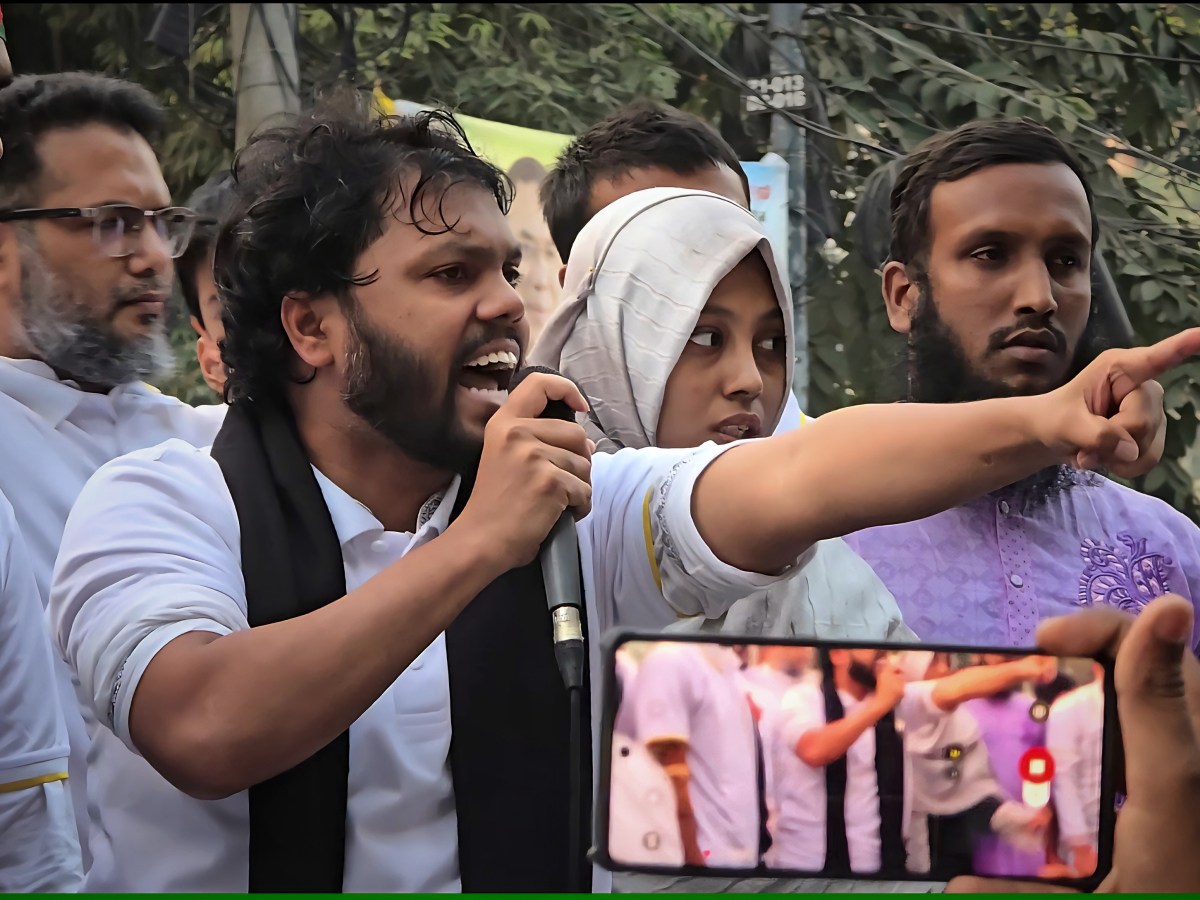
Killing of Anti-India Leader Deepens Dhaka–Delhi Rift
The death that changed Bangladesh’s political weather.
The post-Hasina shockwave
It has become clear that South Asia’s next major crisis may not arise from military conflict but from the insidious manipulation of information and skewed media narratives that shape public opinion on both sides of the border.
Bangladesh’s democratic transition is the first in decades not to feature a government favored by India. As a result, the Indian media is portraying this situation as an existential threat. This conflict over narratives is affecting diplomacy, border stability, and domestic politics across the region.
When Bangladesh’s pro-India prime minister Sheikh Hasina fell in a popular uprising on August 5, 2024, Indian primetime television went into a kind of frenzy: anchors declaring Bangladesh “on the brink of collapse,” commentators predicting civil war. Panelists are implying the country may not even survive without Delhi’s guidance.
In an extended interview with One-man Newsroom, Bangladesh’s Press Minister in New Delhi, Faisal Mahmud said, “If we speak from a journalistic point of view, the Indian media is better than Bangladesh’s media. More professional, more skilled workforce, higher production quality across print, broadcast, and now online multimedia.”

Faisal Mahmud, Bangladesh’s Press Minister in New Delhi.
“Yet the interesting part is that when they cover Bangladesh, these same sophisticated outlets display a largely skewed vision,” Faisal added. “And when a media ecosystem consistently delivers skewed coverage, it can no longer be considered a good media ecosystem in practice.”
For Example, “Sheikh Hasina and Asaduzzaman have both received death sentences. All one-sided. Oh, will those who are delivering the verdict even survive in Bangladesh? Who knows, before a year passes, some new equation, some new alignment may not emerge,” said the anchor on November 17, 2025, after the verdict was announced, during a live program called Sojasuji Swarnali on a news channel named Republic TV Bangla.
On the same day, in another live program of this TV channel called Jobab Chay Bangla, anchor Mayukh Ranjan Ghosh said, “In the wake of Sheikh Hasina’s death sentence, the very fabric of Bangladesh’s geography and history may require a profound transformation; it could necessitate the creation of a new map and the addition of significant new chapters to our historical narrative.” Immediately after the end of the long rule of the India-leaning AL government in Bangladesh, this Kolkata journalist came into discussion by commenting on a TV program that “Bangladesh will no longer exist.”
Yet inside Bangladesh, the picture was strikingly different, and the gap between perception and reality has now turned into something far more consequential: a full-fledged, politically motivated information war.
Researcher and writer from West Bengal, India, Nazrul Ahmed Zamader, told One-man Newsroom, “We need to understand how India, meaning the whole of Bharat, the common general people, view Bangladesh. The prevailing notion in India regarding the creation of Bangladesh in 1971 is that it occurred with the cooperation of India.”
Nazrul continued, “The media, literature, and culture have reinforced the idea that Bangladesh could not exist without India’s support. This general perception has developed gradually over time. Later, its reflection fell on the media, on literature, and its influence naturally fell on ordinary people.”
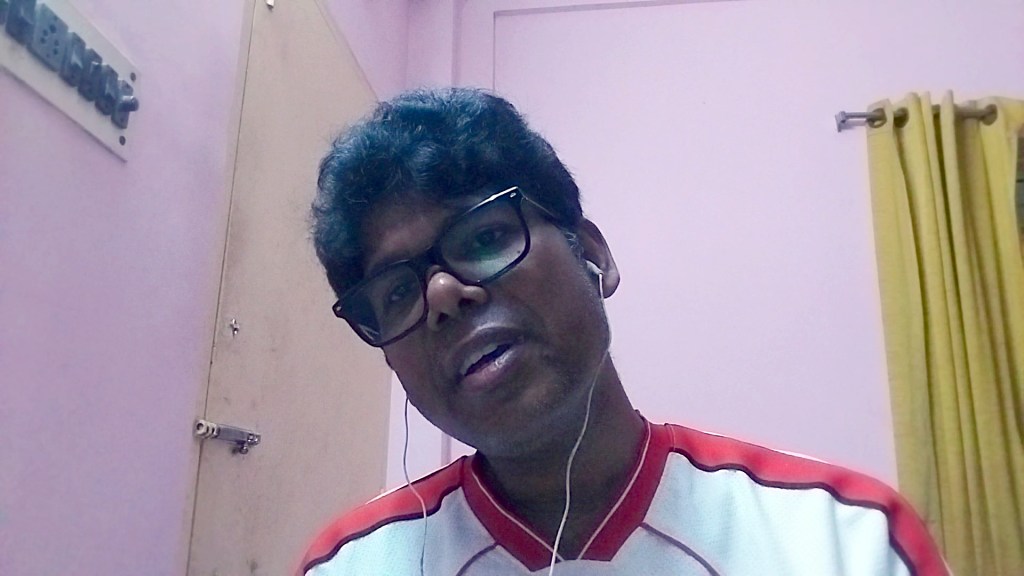
Nazrul Ahmed Zamader is a researcher and writer from West Bengal, India.
“It is important to note that the Indian state has long supported Hasina’s government in various ways. However, they were ultimately unable to continue backing or saving her, as the Indian people could not accept this situation,” he added.
In continuation of this, Bangladeshi cricketers at the T20 World Cup emerged after Mustafizur Rahman was dropped from the Indian Premier League (IPL) on January 3 amid extremist threats. On January 4, the Bangladesh Cricket Board (BCB) convened a meeting with 17 board directors and decided to ask the International Criminal Court (ICC) to relocate Bangladesh’s matches.
The same day, BCB also announced its 15-man squad for the 2026 ICC Men’s T20 World Cup, jointly hosted by India and Sri Lanka. According to the official schedule, Bangladesh was to open its campaign on February 7 against the West Indies in Kolkata, with its remaining three group-stage matches scheduled in Kolkata and Mumbai.
Earlier, Asif Nazrul, an adviser to the interim government, wrote on his verified Facebook page: “As the minister-in-charge of the Ministry of Youth and Sports, I have instructed the Bangladesh Cricket Board to explain the situation to the ICC formally. The board should make it clear that if a Bangladeshi player is unable to play in India despite being under contract, it is impossible to deem it safe for the entire Bangladesh team to participate in the World Cup.”
In the same post, Asif Nazrul urged the government’s Information and Broadcasting Adviser, Syeda Rizwana Hasan, to consider suspending IPL broadcasts in Bangladesh. On January 4, Rizwana told reporters at the Secretariat, “I cannot simply remain silent. On what grounds has Mustafiz been barred? If it were a sporting justification, that would be one thing; but this rationale is unacceptable to us. Our response is therefore inevitable.”
Rizwana added, “It would have been much better if sports had remained solely within their own domain; however, politics has unfortunately infiltrated it. Even amid political conflicts between nations, cultural exchanges and sports can help alleviate tensions. What we are currently witnessing is precisely the opposite.”
Bangladesh’s Adviser for Cultural Affairs, filmmaker Mostofa Sarwar Farooki, also wrote on Facebook: “What happened regarding Mustafiz in the IPL was disgraceful. Bangladeshis have seen the politics of hatred in it, and they are hurt.”

Dr. Yunus’ Diplomatic Push: Key Meetings with Xi and Modi
Bangladesh strengthens ties with China and India for stability.

Yunus and Modi Meet at BIMSTEC: Key Regional Discussions Ahead
Embrace entrepreneurship, create sustainable change—stop job-seeking!
The controversy unfolded amid intensified debate over reports of violence targeting religious minorities in Bangladesh. On December 16 in Abu Dhabi, Mustafizur Rahman was purchased by Kolkata Knight Riders (KKR), owned by Bollywood actor Shah Rukh Khan, for INR 92 million, the highest fee ever paid for a Bangladeshi player in the IPL.
On January 3, the Board of Control for Cricket in India (BCCI) instructed KKR to release the left-arm pacer, ending his contract despite his eight previous IPL seasons with five franchises. The BCCI decision drew intense criticism from Congress MP Shashi Tharoor, who told The Indian Express, “This decision by the BCCI is outrageous. It represents needless political interference in a sporting matter. I take issue with the various motivations behind it.”
Tharoor added, “Have we become so intolerant a country that we are, in effect, against Muslim Bangladeshis and in favour of Hindu Bangladeshis? Those who acted hastily based on social media reactions did not think this through. It is profoundly irrational. I believe it diminishes us as a nation, diplomatically, bilaterally, and culturally.”
The knowledge gap in South Asia
Khandaker Ali Ar Raji, an assistant professor in communication and journalism at the University of Chittagong and editor of the Rastrochinta Journal, told One-man Newsroom, “Maybe India’s central political leadership actually tries to see Bangladesh through the eyes of Kolkata, except for one or two exceptions. I mean, apart from a few exceptions like Shashi Tharoor, most of them know Bangladesh through their Bengali friends, through what Bengalis say, the narratives they create.”
Raji said, Indian Bengalis don’t really know this country well. “For linguistic or other reasons, we may have been together at some point, so some people think we know each other. This situation is similar to how little we Bangladeshis understand about the Arakanese people,” he added.
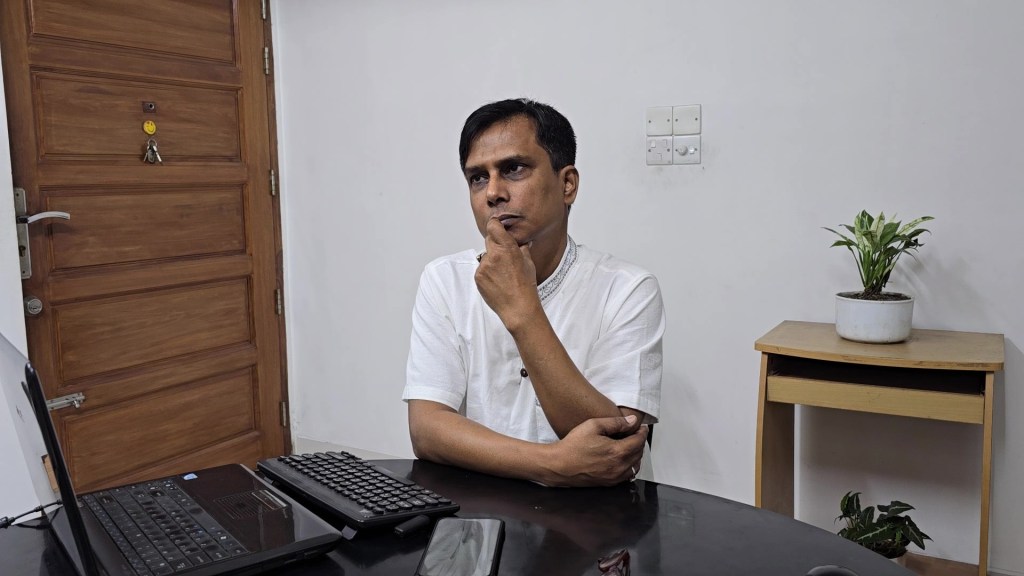
Kh. Ali Ar Raji is an assistant professor in communication and journalism at the University of Chittagong.
Ali Ar Raji mentioned, “West Bengal does not know Bangladesh at all. They have no idea what is happening here, what changes have taken place, how people have transformed. And if we talk about progress, of course, we have advanced. In many respects, the dynamics of an independent country are beyond their grasp. So, apart from feeling pity for them, I don’t see anything else I can do.”
From Kolkata, Atanu Singha also said, “The reality is that very few people in West Bengal, particularly on the north side, have a good understanding of Bangladesh. I could count on my fingers the number of residents who can name all the districts of Bangladesh or mention different areas in Dhaka.”
He said, “My experience living and working in Bangladesh led me to observe that the people of Bangladesh and my friends there have a much deeper knowledge of West Bengal and Kolkata than we do.”
“Since August 5, there has been an improvement; at least people now recognize the names of places in Bangladesh. However, their understanding of Bangladesh’s political history, including figures like Ziaur Rahman and HM Ershad, was previously minimal,” Atanu added.
Explaining this Indian mindset, “When Hasina was there, Bangladesh was a good state; Hasina minus means Bangladesh is not a good state,” Nazrul Ahmed Zamader, a researcher from Jadavpur University, said, “Before the recent uprising, many conscious individuals in West Bengal and our Indian state were largely unaware of notable figures like Tajuddin Ahmed, Maulana Bhasani (Abdul Hamid Khan Bhashani), or Sirajul Alam Khan. However, one name resonated with them: Sheikh Mujib. They all recognized Sheikh Mujibur Rahman as a remarkable leader who played a pivotal role in the creation of Bangladesh.”

Bangladesh and India’s Tensions Amid Murshidabad Violence
Dhaka and Delhi Exchange Blame over Communal Unrest.
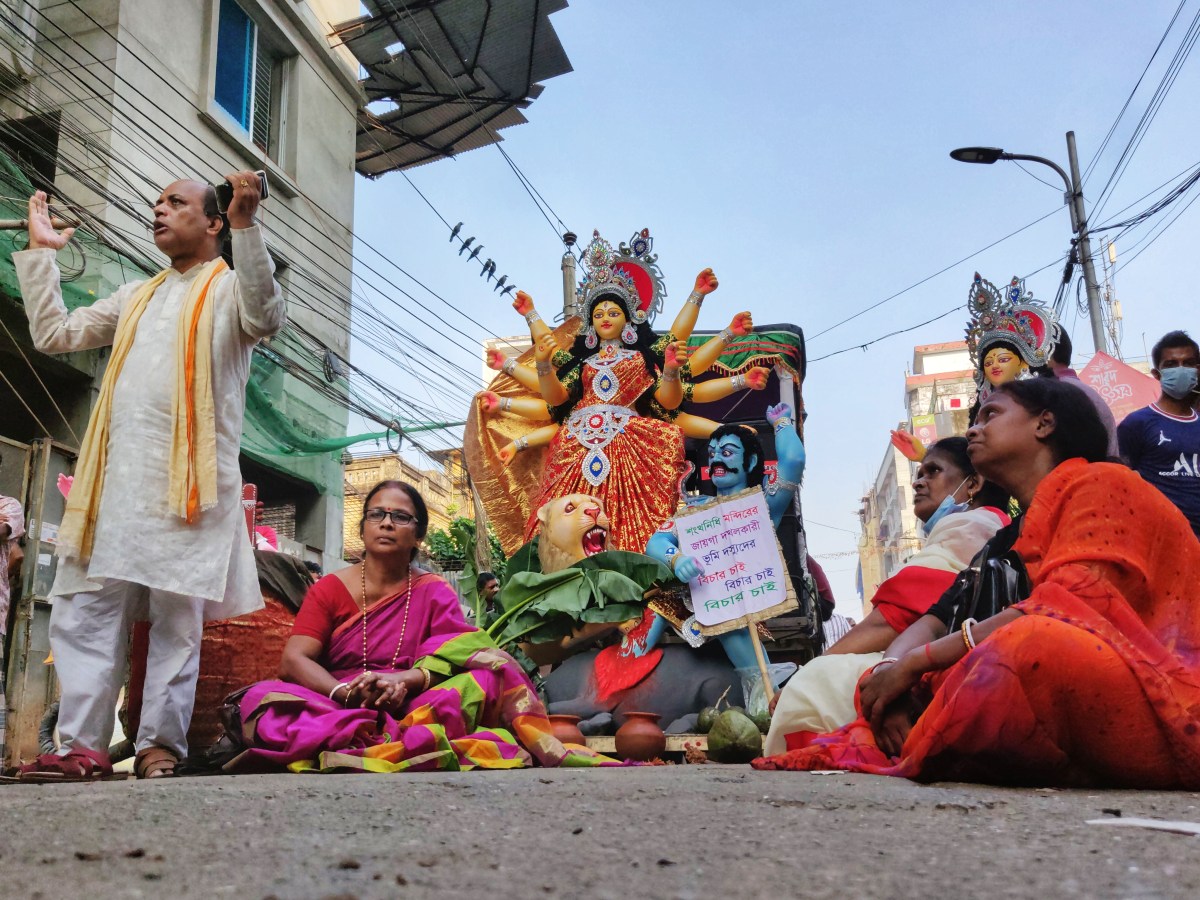
Geopolitical Implications of Religious Intolerance in Bangladesh
US Raises Concerns Over minorities, Dhaka Responds Strongly.
“We cannot deny his significance, but it is incorrect to claim that he accomplished everything single-handedly. It is important to examine history critically. By ‘critical,’ I do not mean negative; rather, one should evaluate it from both positive and negative perspectives. This balanced approach to viewing history has been lacking until now,” Nazrul said.
He continued, “During Sheikh Hasina’s time in power, many people in Bangladesh became so focused on opposing her regime. A significant number of individuals wanted her to leave office, constantly asking, ‘When will she go?’ In two national elections, people reportedly were not allowed to vote freely; instead, the ruling party cast their votes the night before the actual election. This event received little media coverage in India. Under Sheikh Hasina’s leadership, Bangladesh was a friendly and prosperous nation.”
“During Sheikh Hasina’s time, truly, the relationship between the Indian state and Sheikh Hasina was essentially family-centric, party-centric. Much like a king-subject relationship. Meaning, ‘I gave you independence, I gave you a new state so that you will follow my word,’” Nazrul added.
Bangladeshi academic Ali Ar Raji also said, “They (Indians) used to own Sheikh Hasina; they owned her very strongly. For years, Indian public opinion viewed Sheikh Hasina and the AL as natural allies. They saw Bangladesh through that lens. Now that the lens is gone. Suddenly, they have gone blind. They are regurgitating whatever is in their imagination. Their ability to see has collapsed.”
Bangladeshi academic Ali Ar Raji said, “How can an example be illustrated? TikTok content creators cater to a specific audience, while content on platforms like Facebook or YouTube is different. Most consumers in West Bengal and India are similar to TikTok users, suggesting that content is tailored specifically to this segment.”
“In this context, the rise of figures like Mayukh Ranjan, or journalism in his style, is quite natural, as he appeals to similar audiences. Journalism isn’t solely to blame; it mirrors India’s broader issues and mindset, as seen in how Indian media portrays Bangladesh,” Raji added.
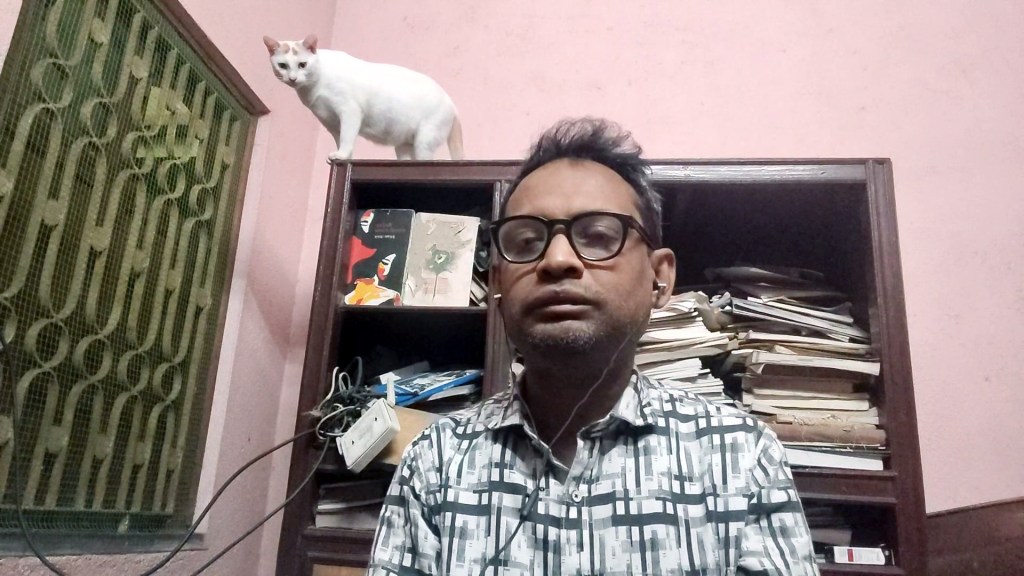
Atanu Singha is a poet and journalist working for a Bengali daily in Kolkata, India.
Atanu Singh said, “Before August 5, when the Awami League government was carrying out repression, the ruling party in West Bengal, meaning the Trinamool Congress, even if very mildly, expressed solidarity with the students. But on August 5, when your government fell, the Awami League fell. Their leaders and activists took refuge in India, since the responsibility of the Ministry of External Affairs lies with Delhi.”
“Since the West Bengal government is a state government, not the government of a sovereign state, it has no jurisdiction to control foreign policy or to speak on such matters. So, it had to accept Delhi’s position quietly. Strangely, a sense of national or state unity emerged regarding the Bangladesh issue,” the journalist added.
“After the fall of the AL government, the Trinamool Congress, which had supported the students’ movement, also swallowed its words and turned 180 degrees in the opposite direction. Leaving aside the BJP (Bharatiya Janata Party) or the CPM (Communist Party of India, Marxist), even the Naxalites or the radical left, who had directly taken to the streets to oppose the fascist regime of the AL, also began to swallow their words,” Atanu said.
So, who benefits from portraying Bangladesh as India’s new enemy?
Up next: Part Two.

Why the West and Big Tech Must Answer for Bangladesh’s unrest?
The social media linking New York and Paris to the chaos in Dhaka.

ISPR Responds to False Claims by India Today on Army Meeting
Bangladesh Army denies coup allegations, reaffirms commitment to security.
 One-man Newsroom
Leave a comment