

📷 One-man Newsroom Collage
After Sheikh Hasina’s fall, under the pretense of showing sympathy for the Hindu community, a large number of Indian mainstream media and social media influencers are allegedly planning a smear campaign against Bangladesh.
According to several Bengali-speaking Indian analysts, this campaign reflects the rise of “anti-Bangla” and “anti-Bangladesh” sentiment within the Rashtriya Swayamsevak Sangh (RSS), the ideological parent of the Bharatiya Janata Party (BJP).
Analysts note that the BJP aims to increase its strength in West Bengal ahead of the 2026 Vidhan Sabha elections. To do so, it has turned Bangladesh into a campaign issue. One-man Newsroom examines why Bangladesh matters in Indian domestic politics and why the fallout from Dhaka is now shaping electoral strategy in Bengal.
Atanu Singha, a poet and journalist at a Bengali daily in Kolkata, India, told One-man Newsroom, “India’s mainstream politics has framed Bangladesh particularly. It portrays the previous Awami League (AL) government as the sole protector of Hindus. As if they only kept the Hindu community close and safe. After their fall, Hindus in Bangladesh are now suffering and facing serious dangers. The mainstream promotes this narrative.”
Atanu continued, “Behind this narrative lies a broader political idea: that only the AL protected Hindus. Therefore, the fall of the AL presented an immediate threat to the state and public life of the Bangladeshi Hindu community. This framing has repeated itself across Indian media since August 5, 2024, as if it is a concern for Hindus, particularly a concern for Bangladeshi Hindus. That is the façade.”
Since Hasina’s fall, a sizable portion of the Indian media ecosystem has broadcast hostile commentary portraying Bangladesh as unstable, Islamist, or unreliable. Pro-BJP digital creators amplified these narratives.
“Pure propaganda spread the narrative that thousands of Hindus were slaughtered or hacked to death after Hasina’s ouster,” Nazrul Ahmed Zamader, a researcher and writer from West Bengal, India, also told One-man Newsroom. The rhetoric now travels faster, spreads wider, and is more tightly aligned with electoral interests.
“The media campaign ahead of 2026 aims to convince West Bengalis that without the BJP; their state will effectively become part of Bangladesh. It has created a deep social divide, a relationship of mutual hostility, where Bangladesh has become a shorthand for terrorism and extremism. Major outlets, especially Republic TV, tirelessly amplify the narrative that Bangladesh will encroach upon the ‘Seven Sisters,’ or the Northeast,” Nazrul said.
In an interview with One-man Newsroom, Bangladesh’s press minister in New Delhi, Faisal Mahmud, said, “It is no longer a secret to the people of Bangladesh that the attacks from the Indian media are not isolated. It no longer seems that these actions are independent or uncoordinated. It increasingly appears to be a coordinated campaign.”
“It remains unclear who is directing it or whether a media cell affiliated with a political party is incentivizing it. But anyone can certainly form a clear hypothesis,” he added.
“However, it is true that after Hasina’s departure, an Islamic fundamentalist force has gained ground. There has been a visible surge of Islamic nationalism. Hindus are not the only ones impacted; the Sufi sites are also affected. There have been almost 200 shrines destroyed. It is a deeply troubling signal,” Nazrul, a researcher from Jadavpur University, said.
Khandaker Ali Ar Raji, an assistant professor in communication and journalism at the University of Chittagong and editor of the Rastrochinta Journal, said, “What is the Indian media doing? They are exaggerating. In our view, they are sensationalizing the situation. But are these incidents not happening in our country at all? They are happening. Perhaps not to the scale or in the exact manner they portray, but the incidents exist, even if to a lesser degree.”
“People often describe the media as a mirror. But mirrors do more than reflect; some distort, some magnify, and some minimize. In this case, the Indian media is magnifying certain incidents in Bangladesh. Still, it would be wrong to claim these incidents don’t happen at all,” Raji told One-man Newsroom.

BGB Accuses BSF of Border Killings; Joint Dhaka Talks Yield Commitments
Bangladesh also protests illegal push-ins of Rohingyas.

Bangladesh and India’s Tensions Amid Murshidabad Violence
Dhaka and Delhi Exchange Blame over Communal Unrest.

ISPR Responds to False Claims by India Today on Army Meeting
Bangladesh Army denies coup allegations, reaffirms commitment to security.
Sometimes Bangladeshi media outlets responded with sharper anti-India coverage. Pakistan’s media joined in, using the Indo-Bangladesh tensions to advance its own strategic messaging. This three-way information war has revived old fears about South Asia’s communal politics. Online, Islamists promote the idea of a “Ghazwa-tul-Hind.” Hindu nationalists, meanwhile, promote the vision of an “Akhand Bharat.” Hindus and Muslims are once again fierce rivals across borders. Violence has also escalated.
Since August 2024, Bangladesh has experienced a series of killings targeting Hindu citizens. In India, mobs attacked Bengali-speaking individuals, suspecting them of being from Bangladesh.
The Rights & Risks Analysis Group (RRAG), a New Delhi-based independent research tank, claims that Muslims murdered at least 15 Hindus in Bangladesh between December 1, 2025, and January 15, 2026.
The RRAG said, “The murder of 15 Hindu minorities in the last 45 days is unprecedented and exposes the extreme vulnerability of the Hindu minorities.” They added, “These murders are just the tip of the iceberg of other daily acts of violence against Hindus and other minorities across Bangladesh and do not make news in the media.”
“This extreme vulnerability of the Hindu minorities in Bangladesh faces a new challenge. Unlike the previous governments, whether the AL or the Bangladesh National Party (BNP), the Interim Government led by Chief Advisor (CA) Dr. Muhammad Yunus has been dismissing any religious angles to these attacks, often before an inquiry into the murders.”
The Economic Times report cited Suhas Chakma, Director of the RRAG. “Dr. Yunus has been building a narrative to dismiss attacks on Hindu minorities as disinformation campaigns by India,” Suhas Chakma added.
Earlier, on July 10, 2025, in a Dhaka press briefing, a minority umbrella group, the Bangladesh Hindu Buddhist Christian Unity Council (HBKOP), reported that Bangladesh experienced 2,442 incidents of communal violence in the first 330 days after August 4, 2024. On September 19, 2024, the council released a report detailing the 2,010 incidents that took place between August 4 and August 20.
Later, on January 11, 2025, citing a police report, the press wing of Bangladesh’s CA Muhammad Yunus, in a statement, said the minority communities since August last year were ‘political in nature’ and not ‘communal.’ According to the latest official position of the Government of Bangladesh, most incidents involving minority communities in 2025 were criminal in nature rather than communal.
In a report published by the state-owned national news agency, Bangladesh Sangbad Sangstha (BSS), on January 19, 2026, the CA’s Press Wing revealed that out of 645 recorded incidents involving minorities, only 71 were identified as having communal elements. The vast majority, 574 incidents, were assessed as non-communal, arising from land disputes, neighborhood conflicts, political rivalries, and general criminal activities such as theft.
The report emphasized that while the country faces broader law-and-order challenges, with an average of 3,000–3,500 violent deaths annually affecting all citizens regardless of faith, the situation is steadily improving through enhanced policing and transparency. This official disclosure aims to counter misinformation by grounding public discourse in verified facts and evidence-based data.
On the other side, across India, Hindu mobs attacked Bengali-speaking individuals, suspecting them of being from Bangladesh. The South Asia Justice Campaign (SAJC)’s annual rights assessment reported 50 Muslim deaths in extrajudicial or hate-motivated incidents in India during 2025, with at least 12 cases involving explicit suspicions or allegations of the victims being Bangladeshi. While not all cases involved cross-border identity narratives, researchers noted a sharp uptick in profiling language linking Muslims to illegal migration and Bangladesh.
Why Hasina’s fall is a Strategic Shock for India
The way Delhi lost its ‘only trusted neighbor.’
Killing of Anti-India Leader Deepens Dhaka–Delhi Rift
The death that changed Bangladesh’s political weather.

Combatting Disinformation: Bangladesh’s Stand Against Indian Media
Army Denies Baseless Coup Allegations.
The shift toward a monolithic nation-state
Atanu Singha observed, “As the West Bengal elections draw closer in May 2026, the ruling forces have begun moving more aggressively. Their strategy reflects the BJP’s core political philosophy, guided by its ideological parent body, the RSS.”
This West Bengal writer mentioned, “Their ideological project centers on the slogan ‘Hindi, Hindu, Hindustan.’ They aim to transform India’s existing federal structure, a multiethnic, multilingual, and multilayered political space, into a monolithic nation-state model. While India is constitutionally federal, it currently functions as a quasi-federal entity; the RSS seeks to complete its transition into a pure nation-state anchored by three pillars: the Hindi language, Hindutva ideology, and a centralized Hindustani culture.”
Atanu said, “To achieve this, they face two formidable regional obstacles. The first is Tamil Nadu, a stronghold of Dravidian culture with a deeply ingrained resistance to the imposition of Hindutva and the Hindi language. The second is the fragmented Bengal of the East—present-day West Bengal.”
“While the BJP has successfully made inroads into the Northeast, despite political cultures there that are opposed to Hindi nationalism, they have struggled to establish a foothold in two specific regions: the deep South, especially in Tamil Nadu and Kerala, and West Bengal. In the South, although Karnataka has largely tilted toward them, Kerala remains under the influence of the Left, and Tamil Nadu is led by the Dravida Munnetra Kazhagam (DMK)’s Tamil nationalist bloc. In West Bengal, despite a complex and often volatile political history, the BJP has faced repeated defeats. During the national rise of Hindutva, it was Mamata Banerjee and the Trinamool Congress (TMC) that effectively halted their momentum in Bengal.”
In an interview with One-man Newsroom, Atanu continued, “Mamata Banerjee’s politics is notably decentralized and leans toward a subaltern, or lower-class, populist appeal. Although the TMC remains a bourgeois party, its support base is firmly rooted in rural and suburban demographics, consisting of lower-class Hindus, Bengali Muslims, and Adivasis. This diverse coalition presents a significant structural challenge for the RSS and the BJP.”
“To dismantle this, their primary instrument is the weaponization of Islamophobia. Their narrative suggests that West Bengal is being overwhelmed by ‘infiltrators’ from Bangladesh. They claim that following the fall of the secular AL, an Islamic upsurge in Bangladesh will inevitably spill over and seize control of the entire Bengal region. This propaganda posits that with the support of the Dhaka elite, Bangladeshis and Rohingyas are altering West Bengal’s demographics, thereby placing Bengali Hindus under an existential threat that only a BJP electoral victory can avert,” he mentioned.
Atanu said, “For this narrative to succeed, generic Islamophobia is insufficient. For decades, Pakistan served as the primary ‘other’ in mobilizing anti-Islamic sentiment in India. However, that old polarity has lost its potency. The new strategy involves cultivating a specific hatred toward Bengali Muslims. In this configuration, ‘Bengali-hatred’ and Islamophobia merge into a single ideological bloc.”
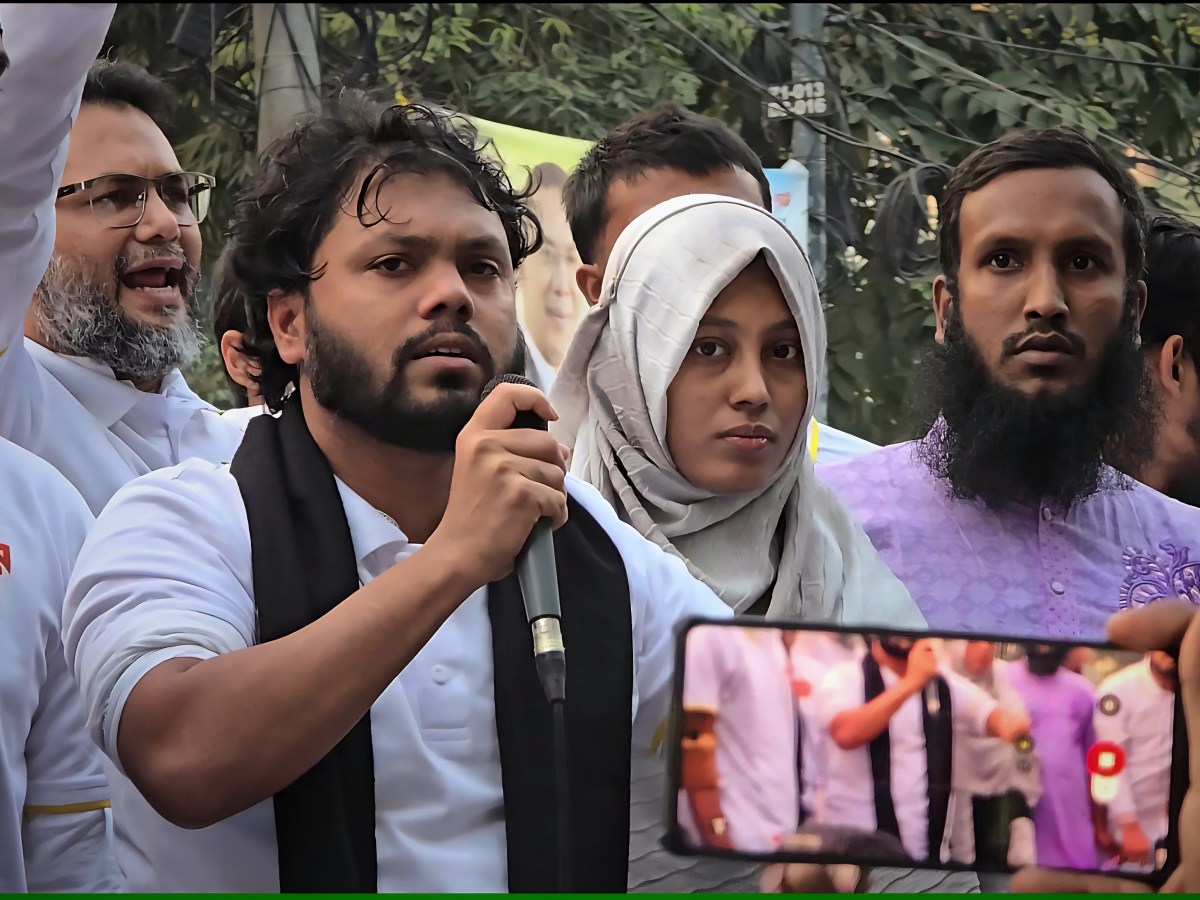
Key Suspects in Hadi Assassination Caught in India
West Bengal STF detained two near the border.
How Corporate Capital is Shaping a Regional Crisis
Adani, Cricket, and the India–Bangladesh Power Play.

Trafficked by the State: From BD Cells to IND Custody
COIED exposed the hidden agreements that cost lives.
Nazrul, who left journalism to focus on research, added to this analysis, stating, “India’s internal politics today is driven by a very large framing, one that privileges numerical majoritarianism and majoritarian ideology. The idea is that a numerical majority, meaning Hindus, should define the nation. But within that majority, there are many intersections and differences; not all Hindus in India willingly support the BJP.”
“Yet an important strand of their project links religion to the idea of Pakistan as an adversary. In North and parts of Western India, the BJP’s agenda has already succeeded. With the abrogation of Article 370 in Kashmir and the completion of the Ram Temple in Ayodhya, the BJP fulfilled two flagship goals of the Hindutva project. Now their attention is turning eastward,” he said.
Nazrul mentioned, “The BJP has a long-term strategic plan to capture West Bengal, invoking the legacy of one of its founders, Shyama Prasad Mukherjee. Historically, Bengal’s left-progressive constituency and its large Muslim population have thwarted these ambitions. Now, they are exploiting the ‘Bangladesh issue’ to instill a sense of ‘dangerous’ instability.”
The Delhi hegemony and the magnification
Atanu further noted that political culture in the Indian Union, particularly in West Bengal, is heavily influenced by a ‘Delhi Hegemony’ built around the Hindi-Hindu-Hindutva axis. He said, “The media serves as an amplifier for these narratives. It succeeds because a segment of the population is actively consuming this content, driven by a long-term process of ideological conditioning.”
Nazrul told One-man Newsroom, “Delhi’s media is acting as an arm of the state, serving its political and cultural interests. In doing so, they have not only targeted Bangladesh but also the people of West Bengal.”
“They have launched a campaign against the people of West Bengal. The people of West Bengal eat fish; they embody social practices that are opposed to the RSS ideology. They speak Bengali. Yet in Delhi’s media lens, they are being portrayed as Bangladeshis.” Nazrul continued, “West Bengal has a large population, approximately 100 million, and a substantial proportion of its residents are Bengali speakers.”
Nazrul stated, “Even media professionals in West Bengal, who understand the reality of Bangladesh, are often trapped within this state-aligned system. For too long, their perspective was skewed by pro-Hasina sympathies, viewing her as the sole protector of stability, which now leaves them vulnerable to the current wave of state-sponsored propaganda.”

Dr. Yunus’ Diplomatic Push: Key Meetings with Xi and Modi
Bangladesh strengthens ties with China and India for stability.

Yunus and Modi Meet at BIMSTEC: Key Regional Discussions Ahead
Embrace entrepreneurship, create sustainable change—stop job-seeking!
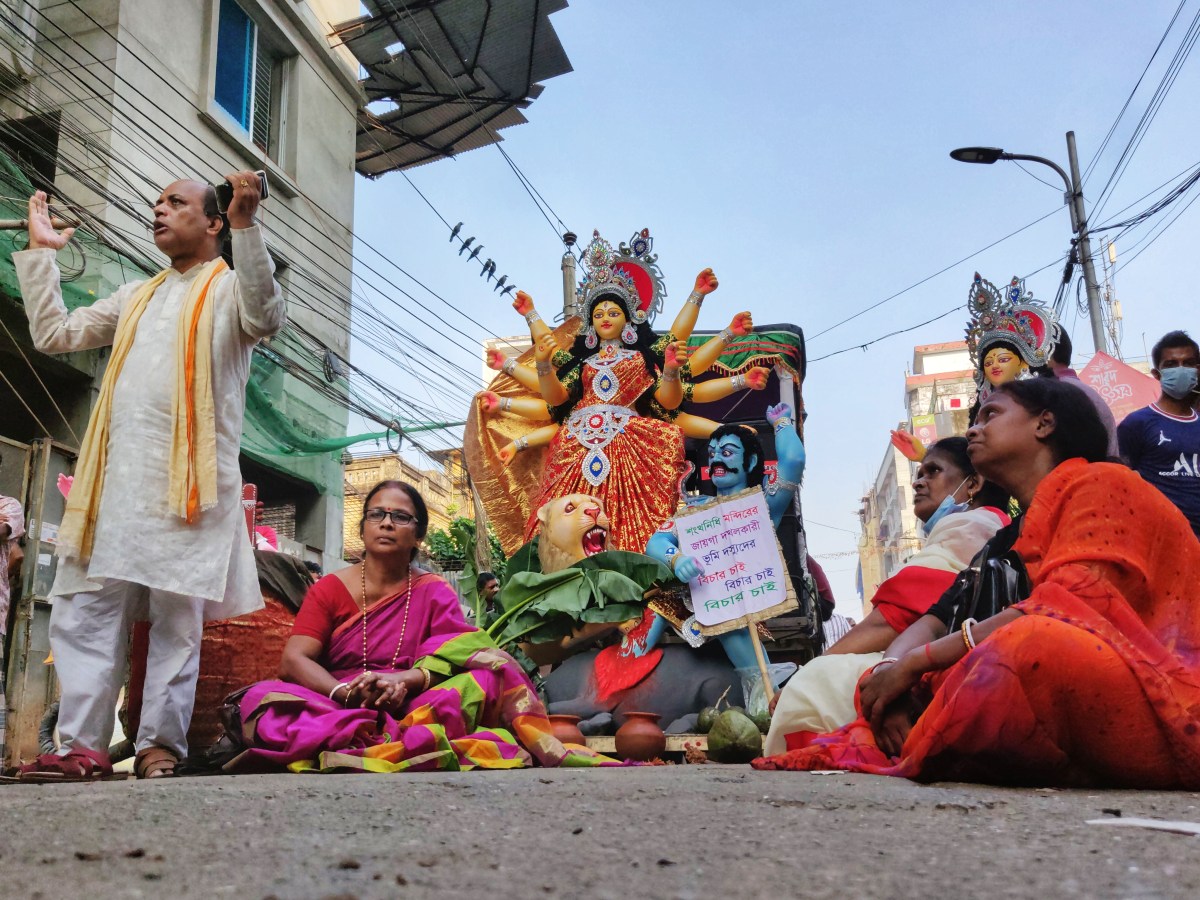
Geopolitical Implications of Religious Intolerance in Bangladesh
US Raises Concerns Over minorities, Dhaka Responds Strongly.
However, Bangladeshi writer and academic Ali Ar Raji argued that market incentives and audience psychology also matter. “Indian media not only support the government party; they also chase TRPs. They must think about what the public wants to watch. The media is not fully independent, whether it is in India or Bangladesh. But in India, the disparities in education and deprivation among the general population are far greater,” he told One-man Newsroom.
“We cannot simply blame the masses; we must recognize that these media institutions survive on high TRPs and circulation fueled by this very fear. However, an anti-extremist political culture still exists, albeit subtly, within the social fabric,” Atanu added.
From India, he said, “Currently, by providing sanctuary to certain AL supporters who have entered India without legal documentation, the BJP is effectively utilizing these individuals as ‘comrades’ in their campaign of Bengali-centric polarization. They are, in essence, working hand-in-hand to facilitate the BJP’s capture of Bengal.”
Atanu said, “Now consider whether the institutional counterforce to this exists. Of course, it does. There are institutional components, and there are oppositional components. And this oppositional institutional force, those who are still combating the BJP, not just in electoral politics but in the realm of ideas and political thought—those voices still exist in India.”
The Blind Spot in Bangladesh’s Defense
Bangladeshi analysts, however, note a parallel failure at home: the country’s media ecosystem remains structurally weak and professionally underdeveloped.
Swedish Bangladeshi journalist and human rights defender Tasneem Khalil, widely known for his investigative reporting, said, “For example, the issue of attacks on the Hindu community is what dominates Indian media headlines the most. It is happening because the Bangladeshi media has remained absolutely silent, completely silent. There has been a deliberate attempt to defer or downplay this issue within Bangladesh.”
“When our own newspapers do not report on our problems, it creates a massive information gap. In such a void, won’t Indian, Burmese, or Chinese media report on it? Of course, they will,” Tasneem continued.
“Why should I view the persecution or oppression of Hindus in Bangladesh as India’s issue? They are citizens of my country; they are my brothers, sisters, and friends. It is our primary responsibility to check on them, to ask how they are, what they are doing, and if they are afraid. And if they are afraid, why?”
Tasneem told One-man Newsroom, “These are the failures of our own media. Why must our Hindu brothers and sisters live in terror after every political upheaval in this country? Is this not a failure of the majority? Yet you cannot speak out; if you do, they label you an Islamophobe.”
He pointed to two investigations by Netra News. “The first challenge questioned the inaccurate death toll reported by the HBKOP concerning communal attacks. We verified cases and showed that the claims were not accurate. The interim government liked that because the HBKOP report had created an embarrassing situation internationally, and the Netra investigation helped resolve it. Netra has that credibility.”
“But then Netra News also published another report,” Tasneem said, referring to a story by staff correspondent Marzia Hashmi Momo. “That report examined what Hindus in Bangladesh actually think. There has been no discussion of that in Bangladesh. None.”
In an extended interview with One-man Newsroom, Ali Ar Raji said, “Our journalism makes no meaningful contribution to any minority group—and I mean any minority. Does it play any role for atheists? Consider that there are roughly a million indigenous hill people, 10,000 to 12,000 transgender individuals, and, assuming a nearly 10 percent figure, millions of atheists. Even if I lowball the figure to a million, do you honestly believe the media can speak in favor of those whom society brands as apostates?”
Ali Ar Raji continued, “So, whose side does the media take? Is journalism inherently designed to champion the marginalized? Normally, it only does so when the general public starts speaking up for them, when the majority begins to find its voice on these issues. The media does not spontaneously create a movement; it covers what is already there. If mainstream figures—say, Mirza Fakhrul (Mirza Fakhrul Islam Alamgir) or the Head of Government—were vocal about minority rights, the media would undoubtedly follow suit.”
“Globally, we have seen that leftist movements have attempted to adopt these causes. However, since majoritarian politics has become synonymous with religious or nationalism-based identity politics, the Left has struggled to find its footing,” Raji mentioned. “They try to highlight every niche minority issue, only to find that the media grants them little to no coverage. But why should the media cover them? Is there an audience for it? Do readers actually want to consume this?”
According to this academic, media outlets provide what the readers demand. Journalism has very little power to dictate public taste. If your country’s cultural appetite is calibrated for TikTok, you cannot force-feed it YouTube or long-form Facebook content. Does the mainstream majority have any genuine interest in the plight of minorities? They do not.
“If they did, they would demand it from the newspapers. They would stand in solidarity with minority issues or activists like Anu Muhammad. But do they? Do they have that drive? If the masses stood up, the media would be there to document it. Since they don’t, the media reflects that absence,” Raji added.
He continued, “Ultimately, the media is a reflection of public desire; you cannot force a narrative through it. Consider an outlet like Prothom Alo. They might give a two-column, two-inch space on the second page to someone like Anu Muhammad simply because he possesses significant social capital.”
“But from a purely business standpoint, they shouldn’t even give him that. If you compare the readership metrics, a story on a celebrity like Pori Moni will always dwarf a serious social issue. The media knows exactly where its readers are. You may preach about social responsibility and the role of the press, but the reality is that the media must first and foremost survive as a business,” Raji added.
Bangladesh: Where the State Erased Its Critics
Enforced disappearances were systematic and politically motivated.
The Journalist the Generals Couldn’t Silence
From torture and exile to exposing Bangladesh’s military deep state.
Arms Trafficking Disrupted: BGB Arrests Indians
Officials seize gun, ammunition from truck.
Faisal Mahmud, press minister to the Bangladesh High Commission in New Delhi, said, “They (India) think they can publish whatever they want in their media. But the implications of what they publish can be very serious. Because India is a big country, and its media ecosystem is also big. If such a large media ecosystem behaves in such a coordinated manner in Bangladesh, what are we supposed to do? That is a very important question.”
Speaking at the 2025 World Press Freedom Day event on May 3, Shafiqul Alam, press secretary to CA Yunus, said, “We have done fact-checking in many cases, which we absolutely have security issues with, but it turns out that it is relentless. Today you do one fact-checking; tomorrow you will do another. The day after tomorrow, you will do another. And in this case, they have no shame or anything like that. We can actually say that our media landscape is much better, in this case, than India’s.”
The media outlets aligned with India’s ruling party sought to portray the 2024 uprising that overthrew the Hasina regime as a Western-backed Islamist resurgence supported by Pakistan. Following the killing of a young anti-Indian activist in Dhaka in December 2025, mobs attacked properties belonging to Transcom Group, the country’s leading media conglomerate and owner of Prothom Alo and The Daily Star, accusing them of being ‘Delhi’s agents.’
Some protesters publicly threatened journalists with death, underscoring the depth of the information-driven rupture shaping the bilateral crisis. Right-wing factions in Bangladesh now control influential outlets that have amplified anti-India messaging, contributing to a hardening of public opinion.
According to Ali Ar Raji, “If the state has any role here, it is to demonstrate what measures are being taken in response to such incidents, since occurrences of this kind can happen in any country. Only then will the government have the moral standing to say to India, Look, we are taking these steps. You were right about the occurrence, even if you exaggerated the scale. We understand your concerns, and we have acted.”
In mid-January this year, amid rising security concerns in Bangladesh ahead of the national election scheduled for February 12, the Indian government took precautionary measures for its personnel and their families. New Delhi has advised the dependents of its diplomats and officials in Bangladesh to return home, citing threats to Indian establishments and safety risks, particularly as political tensions escalate.
India’s Ministry of External Affairs has reportedly designated Bangladesh as a ‘non-family’ posting, and families of diplomats from the High Commission in Dhaka and four Assistant High Commissions are being relocated back to India while the missions remain operational. These steps reflect growing unease in New Delhi over the security environment in Bangladesh in the run-up to polls.
 One-man Newsroom
Leave a comment