
📷 One-man Newsroom Collage
Sharif Khiam Ahmed, Dhaka
The first person I met on the Bangladesh Nationalist Party (BNP) beat during the 2007–2008 caretaker government was Tareq Salman. On my first day, he took me to the party’s central office in Naya Paltan to cover a press conference by the late secretary general, Khandaker Delwar Hossain.
For a young reporter arriving from the southern city of Barishal, Dhaka’s political scene was an initiation into another world. The period known as 1/11, marked by the state of emergency imposed on January 11, 2007, fundamentally altered Bangladesh’s political landscape.
Party leaders were taken into custody by security forces, political alliances realigned in unpredictable ways, and journalists worked in an atmosphere marked by constant uncertainty. Covering the BNP in that period went far beyond standard reporting; it required parsing tightly worded statements, separating conjecture from deliberate strategy, and understanding how political actors wield communication as both a defensive tool and an instrument of influence.
That first day, Tareq Bhai introduced me to a circle of energetic young reporters, including Habibur Rahman Khan, Hasan Shiplu, Shafiq Shafi, Moin Uddin Khan, Hasan Mollah, and Jafar Iqbal. Those early connections, collaborators, and confidants endured across reporting cycles and assignments. Later, I shared a deep bond, particularly with Saleh Biplob and Abdullah Juberee. Still, there were many more among my BNP beat colleagues who shaped my early days in Dhaka.
They include Sumon Mahmud, Elias Hossain, Khurshid Alam, Anwar Aldin, Loton Ekram, Mahmudur Rahman Khokan, Mannan Maruf, Rafique Muhammad, Mursalin Nomani, Mahmud Hassan, Shahabuddin Chowdhury, Rezaul Karim Lablu, Rafiqul Islam Azad, Mossarraf Hossain Bablu, Basir Jamal, Kafi Kamal, Khondoker Kaosar Hossain, Tofazzal Hossain, Ahmed Riad, Afzal Bari, Shariful Islam, MD Mahabubur Rahaman, Moinul Ahasan, Shariful Islam Khan, Omar Faruque, Easin Alam, Ezazul Haque Mukul, Mizanur Rahman, Ainul Haque Royal, Babul Talukder, Borun Kumar Dash, Reazul Qader Shobuj, Hasan Al Javed, Asad Zaman, and many more.
Those names are not simply a list; they represent the informal networks that make political reporting possible in Bangladesh. For me, these ties have been a stabilizing force, reminding me why I resist simplistic portrayals of colleagues I have seen endure relentless pressure day after day.
The recent smear campaign targeting Hasan Shiplu is, in part, what compelled me to write this piece. The orchestrated campaign emerged soon after he assumed a role in the prime minister’s press wing. Watching a colleague I have known for decades reduced to a caricature made silence feel like complicity.
On the BNP beat, Shiplu Bhai stood out not for bombast but for restraint. In a world of loud politics, his quiet demeanor was his greatest tool. He operated on a simple truth: you only get the story if people trust you, and they only trust you if you know when to stay silent.
He maintained working relationships across ideological lines, including BNP-leaning reporters, Awami League or left-leaning commentators, journalists perceived as sympathetic to Jamaat, and those striving to remain strictly nonpartisan.
That does not exempt any government appointee from scrutiny. Nor should it. The larger question is institutional, not personal: What does the formation of a structured prime ministerial press wing signal at this juncture in Bangladesh’s politics?
In a move to strengthen the government’s media presence, Prime Minister Tarique Rahman has set up a dedicated press wing, with veteran journalist Abu Abdullah M. Saleh (Saleh Shibli) taking the helm as press secretary.
Shibli, with decades of experience in journalism and media strategy, stands at the core of the team, ensuring credibility and professionalism in the prime minister’s communications. Supporting him is Atiqur Rahman Rumon, editor of Dainik Dinkal, as additional press secretary.
Later, S A M Mahfuzur Rahman, editor of UNB, was named the prime minister’s speechwriter on March 2. Five journalists—Mostafa Zulfikar Hasan (Hasan Shiplu), Deputy Head of News at Ekattor TV, MD Zahidul Islam Rony, a member of the National Press Club’s management committee, Md. Sujauddoulla (Sujon Mahmud), journalist at Bangla Vision, and Shahadat Hossain Shadhin, journalist at The Diplomat magazine, as deputy press secretaries.
Additionally, K M Nazmul Haque, a nationalist online activist, and Shahriar Pamir of Maasranga TV have joined as assistant press secretaries. Also, on March 3, Senior Information Officer Miz Ashrofa Imdad of the Department of Information was appointed as Assistant Press Secretary to the Prime Minister. With this, the total number of officials in the press wing has risen to 10.
Together, this lineup reflects the government’s emphasis on professional communication, media freedom, and closer engagement with journalists, with the press secretary playing the pivotal role in guiding the prime minister’s media strategy.
The test for any such structure is whether it enables transparent dialogue with the press while preserving journalists’ ability to report freely. Governments have repeatedly found themselves caught between the urge to enforce message discipline and the need to respect press freedom.
In such a climate, a professionalized communication system can serve as both a safeguard and a potential instrument of control. It may enhance transparency through regularized briefings and clearer information channels. Alternatively, it may centralize narrative control.
In Bangladesh, access to state offices, official programs, and press briefings has long reflected partisan affiliations. Under Awami League governments, reporters viewed as sympathetic to the party or the left typically enjoyed easier access. By contrast, during BNP administrations, those considered close to BNP or Jamaat circles often found the gates more open.
For policy-focused and especially independent journalists, access has consistently been more complicated, often requiring extra negotiation, persistence, and caution. Now the question is where things will head under Tarique Rahman’s leadership.
Newly appointed Information and Broadcasting Minister Zahir Uddin Swapan has consistently emphasized that the future of Bangladesh’s media depends on safeguarding journalists’ welfare, ensuring their freedom from fear and intimidation, and fostering independent journalism.
In his meetings across Dhaka and Barishal, he has urged the journalist community to cooperate with him in carrying out the responsibilities entrusted by Prime Minister Tarique Rahman, pledging to modernize media management, adapt to new technologies, and create a safe environment where accountability and press freedom can coexist.
Zahir Uddin Swapan repeated assurances underline the government’s commitment to protecting media independence, recognizing that any attack on the press is an attack on civilization itself.
The health of Bangladesh’s democracy depends precisely on a press corps willing to interrogate those in power, even those who once stood beside them in the field. I am eager to continue covering the BNP and provide deeper insights into their leadership and government in the days ahead.
While on the BNP beat, I joined sheershanews.com through Imran Hasan Majumder, marking a turning point in my career. I soon found myself covering a vast political landscape, from Jamaat-e-Islami and Jatiya Party to 37 smaller parties—essentially everything outside the traditional BNP-AL binary.
Even though my focus had shifted, I was often called back to the front lines whenever significant political upheavals occurred. One of the most historic events I covered was the removal of Begum Khaleda Zia from her longtime home in the Cantonment.
This journey eventually led me to the Parliament beat. There, I revisited BNP’s beat through parliamentary reporting, and my move to international journalism truly broadened my horizons, enabling me to cover the party with the depth and global perspective it required.
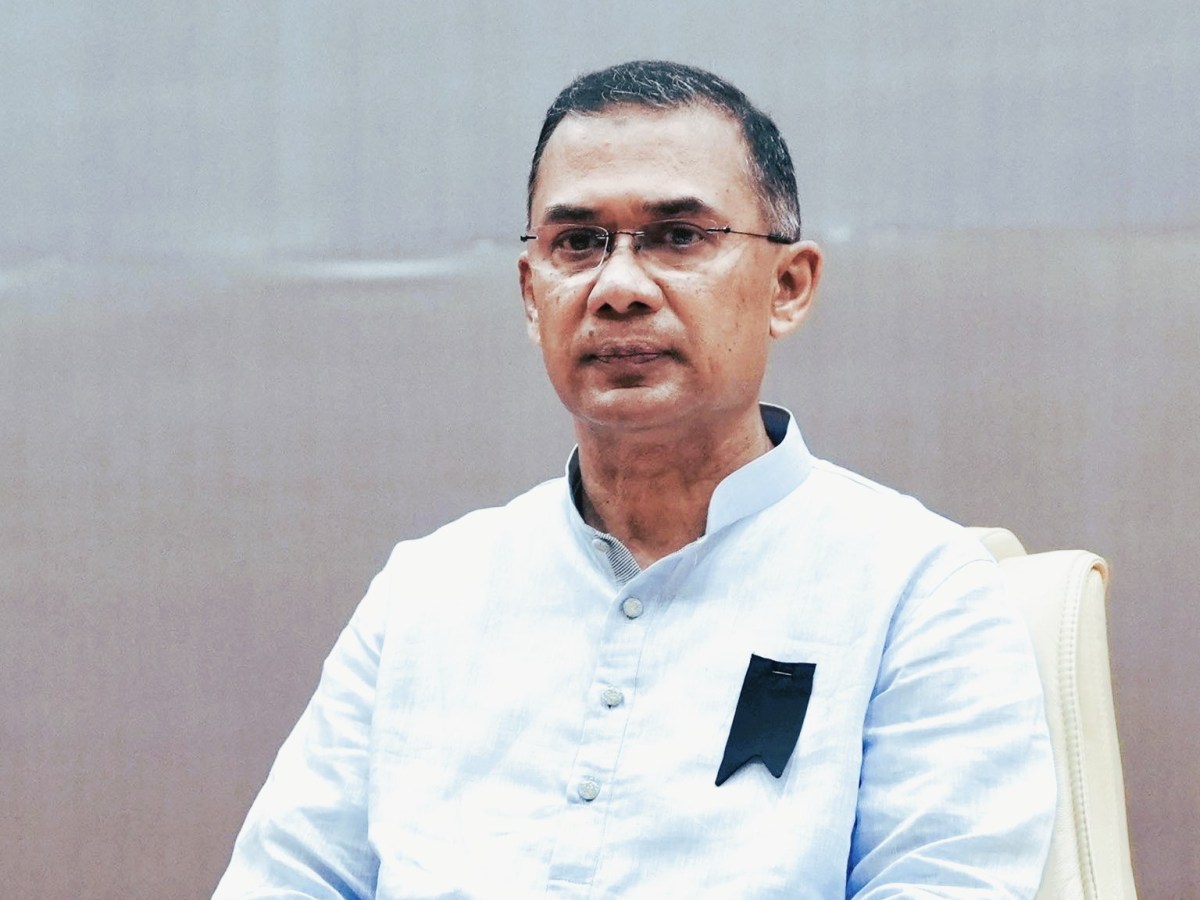
Dhaka Urges Restraint as Mideast War Escalates
PM Tarique Rahman leads double crisis response.
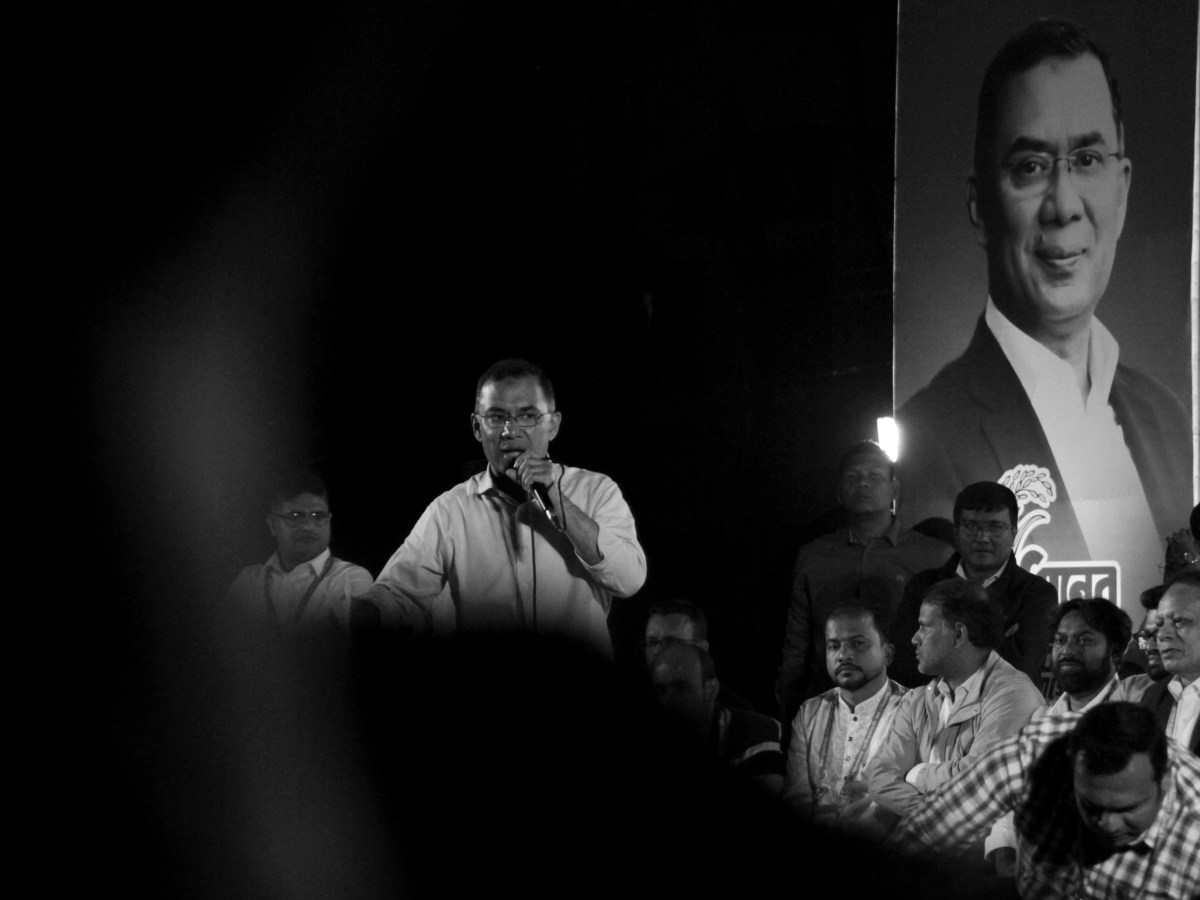
Global Lens on Dhaka: The Rahman Resurgence
A compilation of international media headlines.
How Corporate Capital is Shaping a Regional Crisis
Adani, Cricket, and the India–Bangladesh Power Play.
How Bangladesh Became a Campaign Issue in India
Hasina’s fall and the BJP’s Bengal calculus.
Why Hasina’s fall is a Strategic Shock for India
The way Delhi lost its ‘only trusted neighbor.’
 One-man Newsroom
Leave a comment