
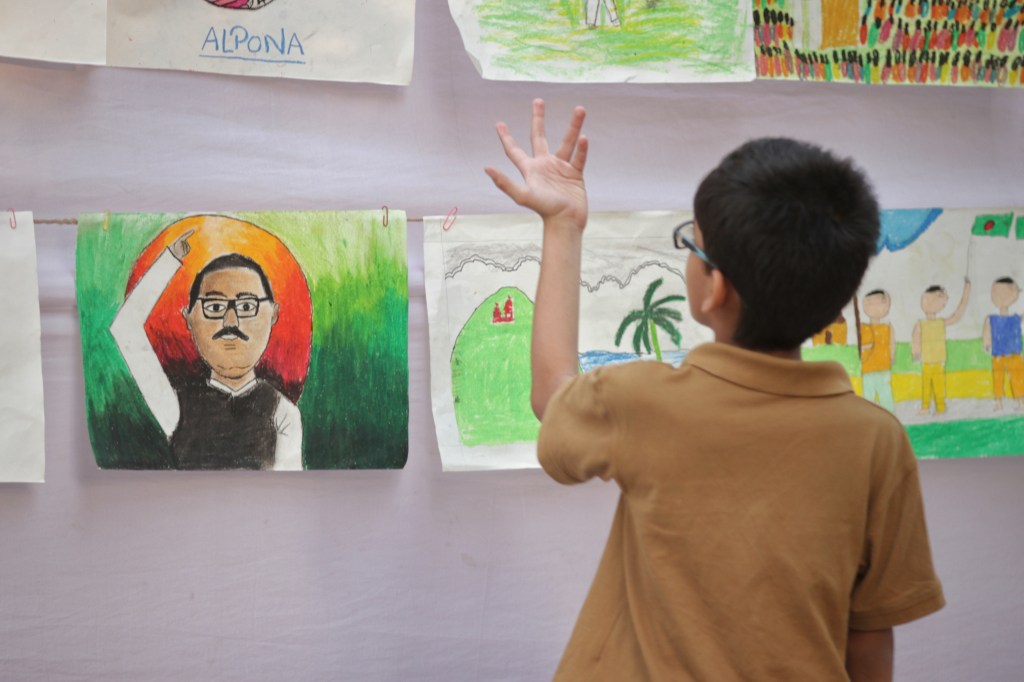
March 17 once saw classrooms transformed into vibrant galleries as young students sketched their tributes to Sheikh Mujibur Rahman. These crayon-colored portraits served as a collective youthful reimagining of the founding leader’s legacy.
📷 Sharif Khiam Ahmed
Newsman, Dhaka
For the second consecutive year, the morning of March 17 passed in Bangladesh without the familiar sight of schoolchildren lining up for art competitions or state-sponsored festivities.
The date, formerly observed as National Children’s Day to commemorate Sheikh Mujibur Rahman’s birth anniversary, has been officially struck from the national calendar, signaling a definitive shift in the state’s commemorative policy.
The erasure of March 17 from the national calendar is not just a policy change; it is the closing of a chapter. As Bangladesh redefines its identity in 2026, the absence of this holiday reflects a nation that has consistently used its calendar as a battlefield for memory.
It marks a definitive end to a practice that was once a centerpiece of the country’s cultural and political life. The portraits of the “Father of the Nation” have been removed from school walls to the silent drawers of history, replaced by the faces of a new, student-led movement.
The removal of March 17 from the list of public holidays began as an immediate policy shift under the interim government following the mass uprising on August 5, 2024.
Following the uprising, the interim government initiated its removal, a policy now solidified by the BNP-led government. A Cabinet notification on March 11, 2026, officially excluded all days tied to the Mujib family from the list of 89 observed days.
A formal Cabinet Division notification issued on March 11 finalized the exclusion of all national days tied to the birth and death anniversaries of Sheikh Mujibur Rahman and his family members, signaling a fundamental reorientation of the state’s official memory.
Whether these dates survive as partisan commemorations or fade into private remembrance will depend on civil society, political actors, and the archival institutions that steward the visual record of the era.
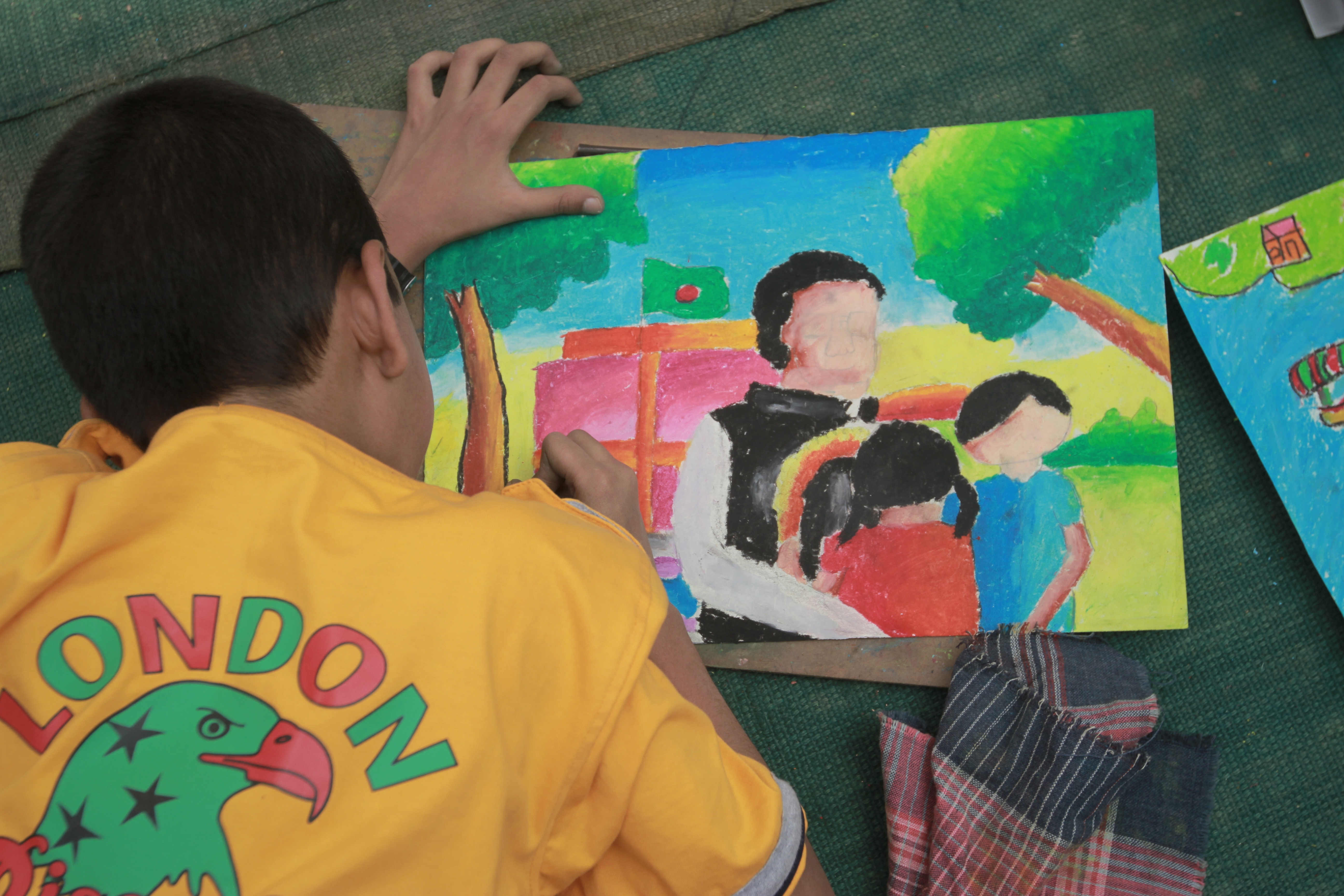
While the state has withdrawn its patronage, the visual legacy of the last fifteen years remains in the archives. For a generation of students, March 17 meant painting “Mujib in Crayon.” 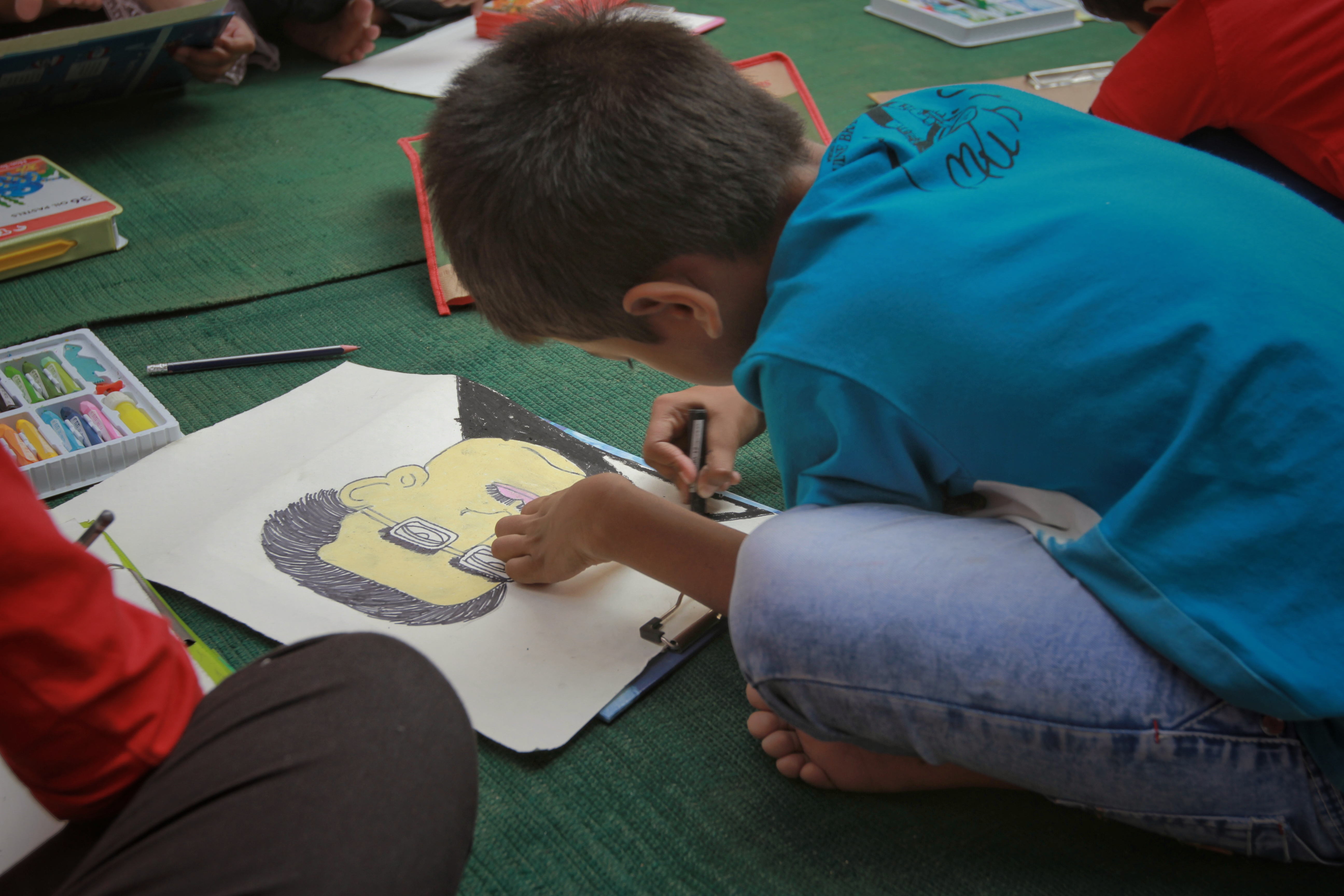
The removal of March 17 from the state calendar marks a deliberate redefinition of public memory. 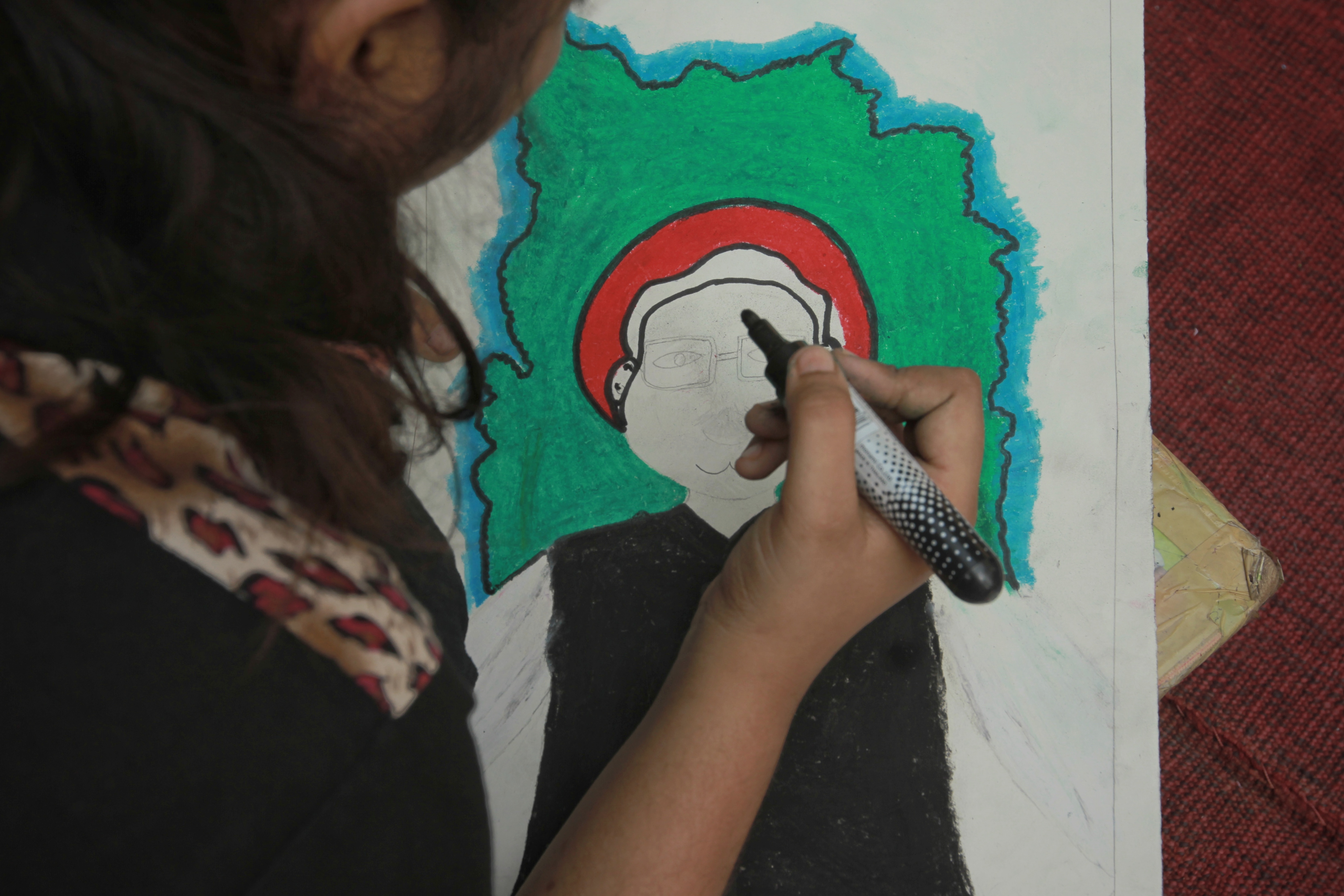
With official patronage withdrawn, those images risk becoming archival relics: preserved in school albums and institutional archives, meaningful to communities but no longer part of the state’s ceremonial script. 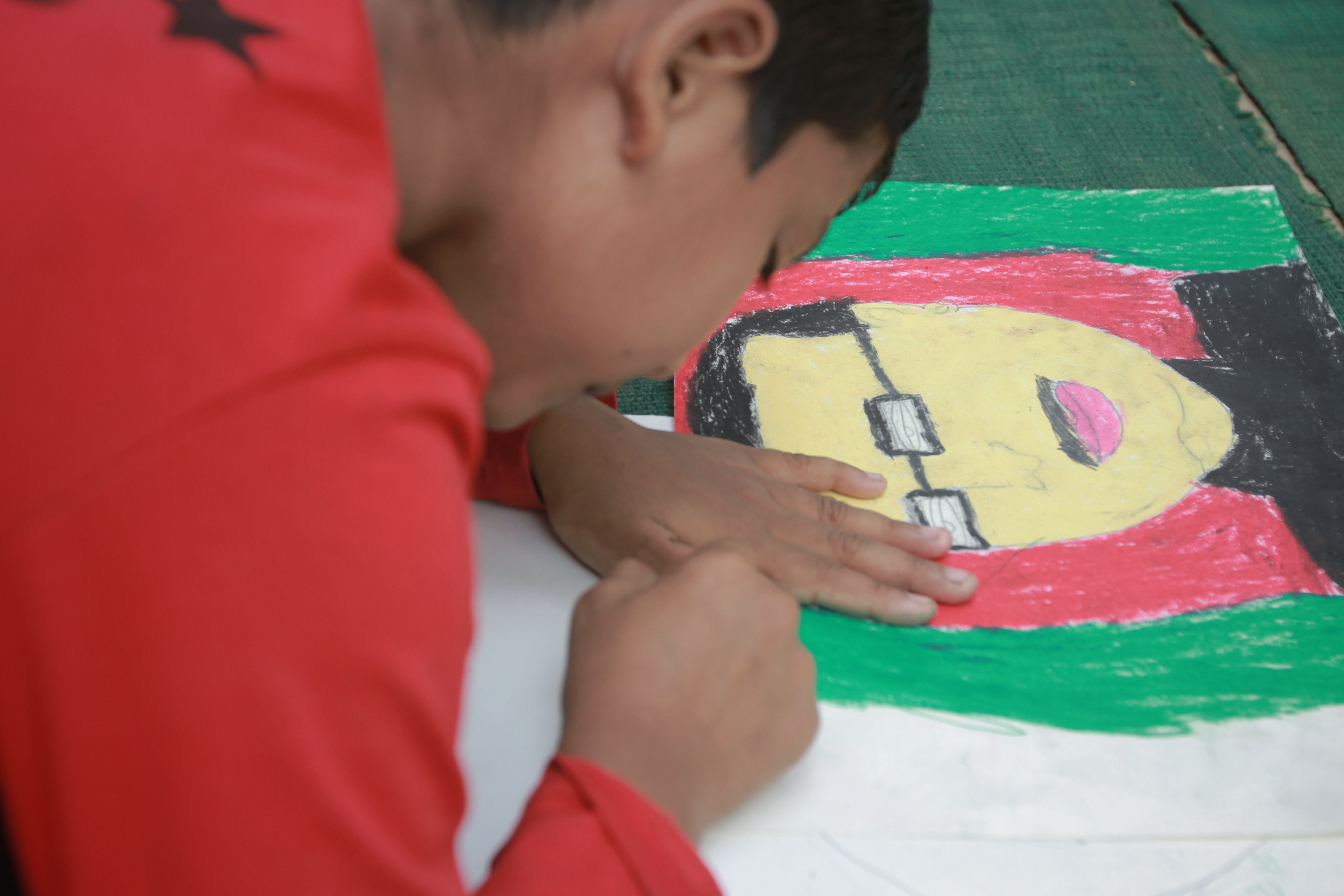
Whether these dates survive as partisan commemorations or fade into private remembrance will depend on civil society, political actors, and the archival institutions that steward the visual record of the era. 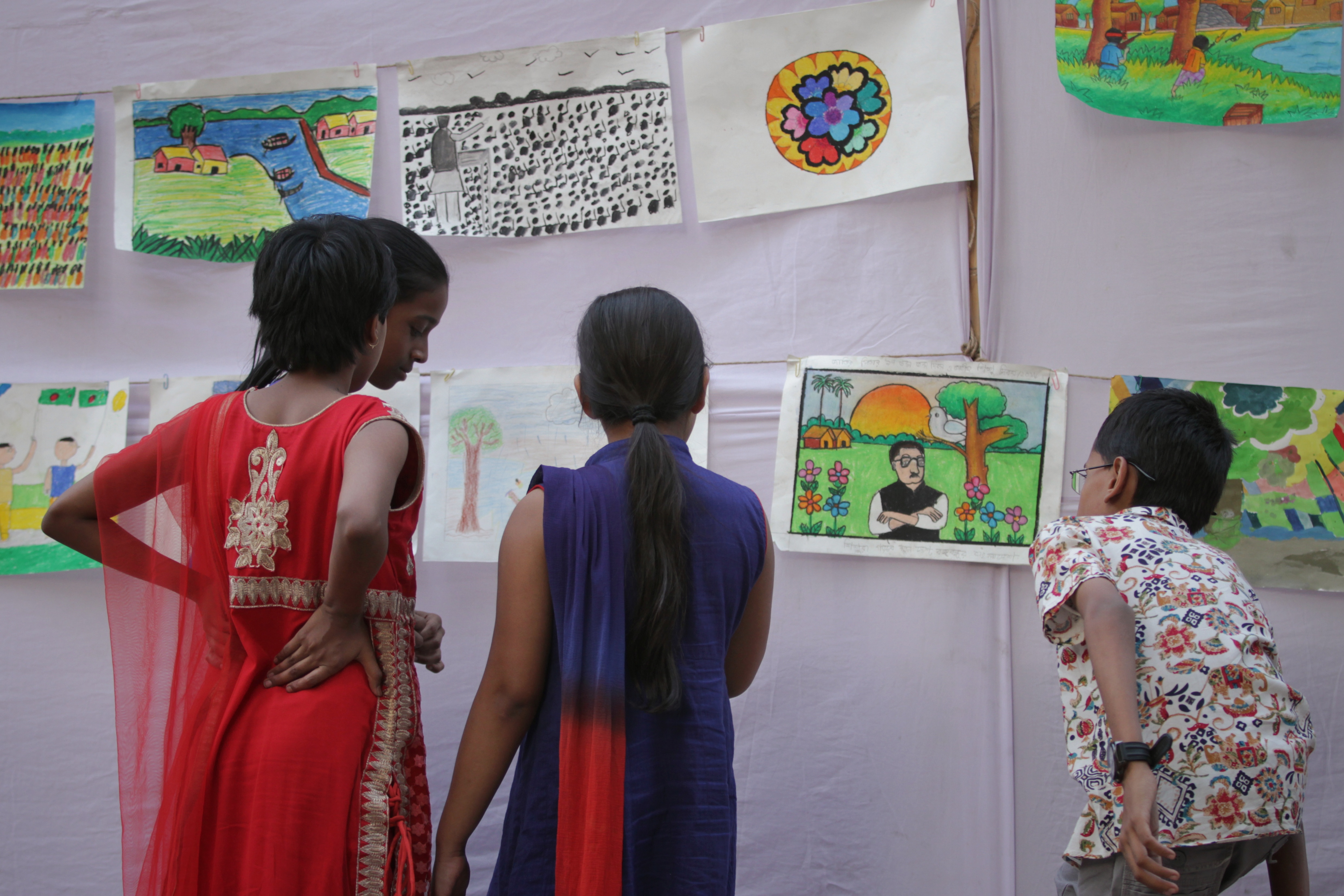
These countless portraits, vivid, youthful, and state-encouraged, now stand as historical artifacts. They represent a period of intensive state iconography, now eclipsed by a new political reality.
📷 Sharif Khiam Ahmed
History shows that the status of March 17 is always a mirror of Bangladesh’s polarized political landscape. Originally introduced in 1996 by the Awami League, the holiday was notably absent from state observance during the BNP-Jamaat coalition government from 2001 to 2006, as well as under the subsequent military-backed caretaker government.
After the Awami League returned to power in 2009, it remained a mandatory national event for the next fifteen years until the political landscape shifted once more in late 2024.
Despite the state’s withdrawal of patronage, the visual archives of the past two decades remain filled with the relics of this era. For years, the imagery of “Mujib in Crayon,” thousands of youthful portraits drawn by students, symbolized a state-mandated connection to the founding leader.
Mujibism Under Scrutiny: A New Era in Bangladesh
50 years after Sheikh Mujibur Rahman’s assassination.

Prof. Yunus’s Leadership: Hope or Hurdles for Bangladesh’s Rights?
A year after the Nobel laureate got power, concerns remain.
Although international bodies like UNESCO continue to preserve the historic March 7, 1971, speech in their global registers, the celebration of the man behind the voice has once again returned to being a partisan memory rather than a state-sanctioned one.
As the nation redraws its identity, the portraits that once adorned classroom walls have moved into the silent drawers of history, marking the rise of a new narrative born from the streets. The state’s commemorative energy is now on the July Revolution.
The calendar, once dominated by August 15 and March 17, is now anchored by the following: July 16, the July Martyrs’ Day, is a tribute to the sacrifice of student Abu Sayeed. August 5, the July Uprising Day, marks the fall of the previous administration.
The Cabinet’s move follows earlier interim measures taken after the mass unrest of 2024 and now stands as a definitive administrative break with the commemorative practices of the previous era.
The reshuffle is not merely bureaucratic; it reorients state memory. The government’s public messaging frames these changes as recognition of a new chapter in national history.
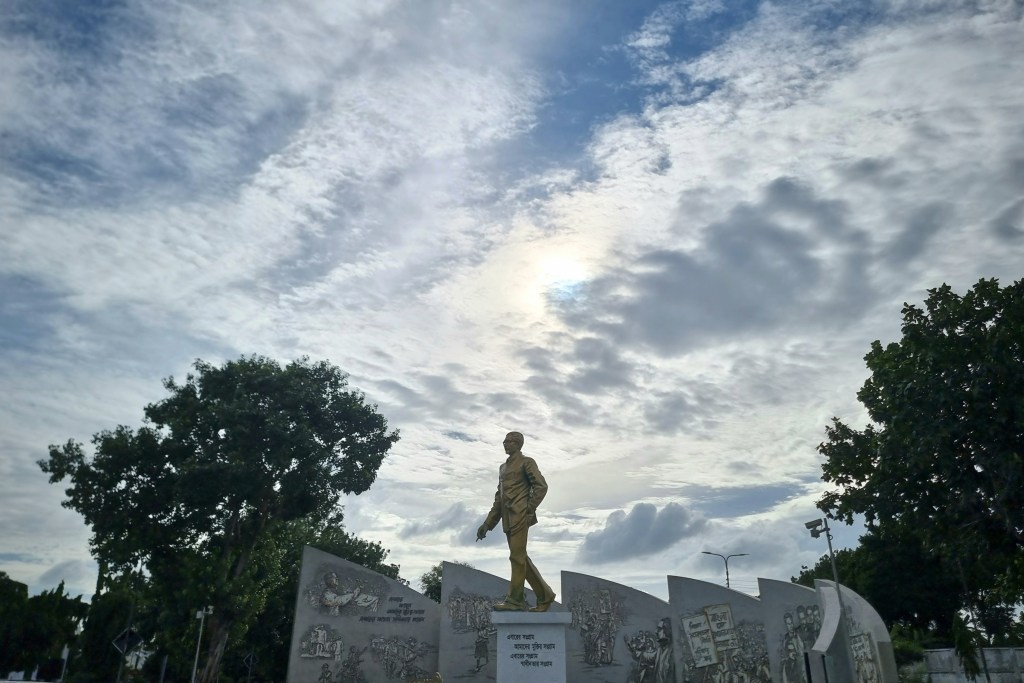
Once a definitive symbol of state authority, this monument was dismantled by protesters shortly after Sheikh Hasina’s exit on August 5, 2024, marking a dramatic end to a decades-long political era. Captured during a nationwide curfew just fifteen days before the resignation of former Prime Minister Hasina, this colossal sculpture of Sheikh Mujibur Rahman was a permanent fixture on the prime minister’s daily route, situated directly between her official residence, Ganabhaban, and the Tejgaon Prime Minister’s Office.
📷 Sharif Khiam Ahmed
 One-man Newsroom
Leave a comment