
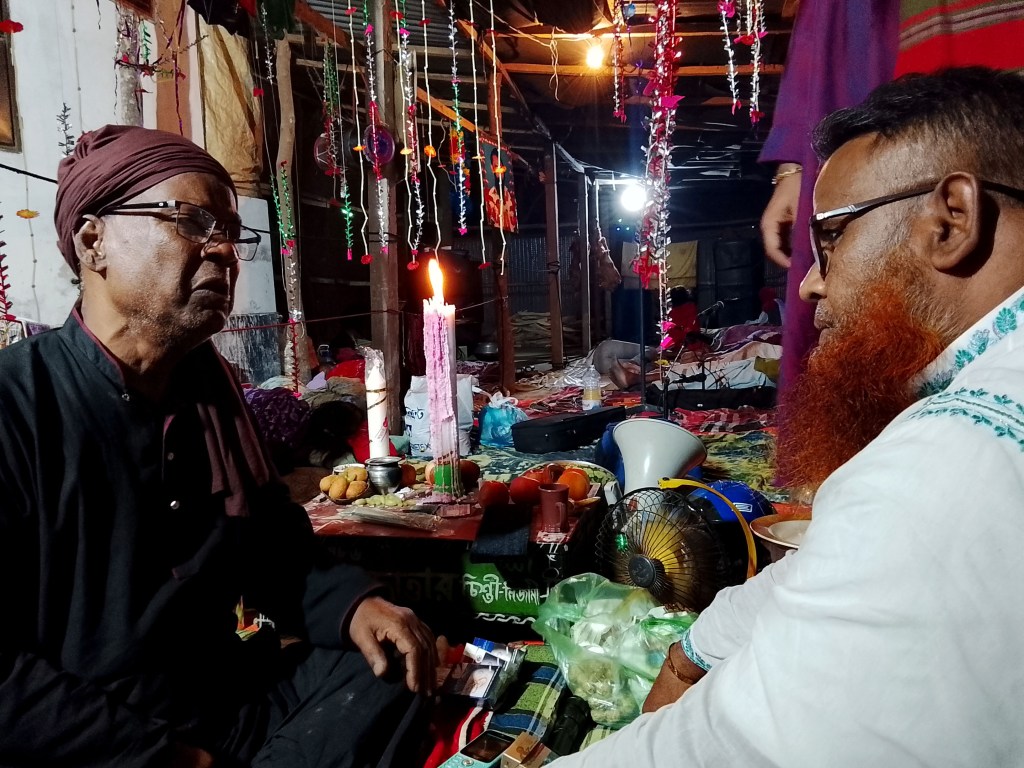
Filmmaker Mahbub Hossen captured this moment of a conversation between a mentor and his disciple at the Solaiman Lengta Fair. April 1, 2026.
Local authorities have shut down the century-old Soleman Lengta Mazar Urs and Fair, a staple of Bengali folk culture in the neighboring district of Dhaka.
The 107th edition of the festival, held in the Beltoli area of Sadullapur Union in Matlab Uttar Upazila to commemorate the death anniversary of Sufi saint Hazrat Shah Solaiman (RA), popularly known as Soleman Lengta, was ordered to close.
On Wednesday (April 1) night, Assistant Superintendent of Police (Matlab Circle) Jabir Husnine Sanib stated, “As the fair lacked official authorization, we directed an immediate cessation of activities. And the public is being notified accordingly across the vicinity.”
The shutdown follows a memorandum submitted to the Deputy Commissioner by the Jamiat Ulema-e-Islam, an Islamist organization. According to Dhaka-based news bdnews24.com, the group alleged that the fair was a hub for drug abuse and ‘immoral activities.’
Upazila Nirbahi Officer (UNO) Mahmuda Kulsum Moni confirmed the decision to the Daily Inqilab, stating, “The district administration did not grant permission for the Solaiman Lengta Fair. Consequently, it is announced on Wednesday evening that the fair will be closed starting Thursday.”
Tensions escalated on the opening day (March 31) when a violent clash erupted over drug-related disputes, leaving the shrine’s head custodian, Motiur Rahman Lal Mia, injured. Law enforcement intervened to restore order, but the incident provided the pretext for the final closure.

Why Are Devotees Protesting the Pruning of a Banyan at Shah Ali?
Activists say shrines face a systematic crackdown in Bangladesh.
Spirituality vs. indecency
The closure has reignited a debate over the perception of folk spirituality. While local critics and some media outlets, such as the Daily Chandpur Kantha, have described the mixed-gender dancing and singing at the shrine as “surpassing the limits of indecency,” practitioners see it differently.
Filmmaker and activist Mahbub Hossen, who has documented the shrine since 2018, visited the fair this year and noted a significantly higher turnout than in previous years. He views the ‘indecency’ allegations as a product of profound ignorance.
“What is the point of shutting down a century-old folk festival like this?” Hossen told One-man Newsroom on Thursday. “Those who dance to folk rhythms as a form of divine love possess a spiritual state (halat). Only those lacking the wisdom to understand this would reduce it to crude sexuality.”
Hossen, who began visiting the shrine while filming a documentary on folk music and spirituality, expressed his frustration with the increasing pressure on these traditions. “Last year, music was completely banned. Seeing the helpless eyes of female artists back then left me devastated. Hearing that the fair is closed again this year makes me feel equally helpless,” he added.
A Pattern of ‘mob violence’
The incident in Chandpur is not an isolated case. During the previous interim government, shrines and folk gatherings across Bangladesh faced frequent attacks. While there was widespread hope that the transition to an elected government would end such attacks, similar incidents have recently surfaced in Barisal and Sylhet.
While many hoped the transition to an elected government would end this trend, recent reports suggest otherwise. In Barisal and Sylhet, mob violence targeting Sufi practices and Baul music has recently surfaced:
In mid-March, a mob under the banner of ‘Towhidi Janata’ attacked the 38-year-old Habib Shah Dargah in Barisal, vandalizing musical instruments and blocking the burial of the shrine’s founder on the premises.
Similarly, on March 22, a Baul music festival at the Ibrahim Shah Mazar in Sylhet was violently disrupted by a mob that stormed the stage and destroyed the artists’ equipment.
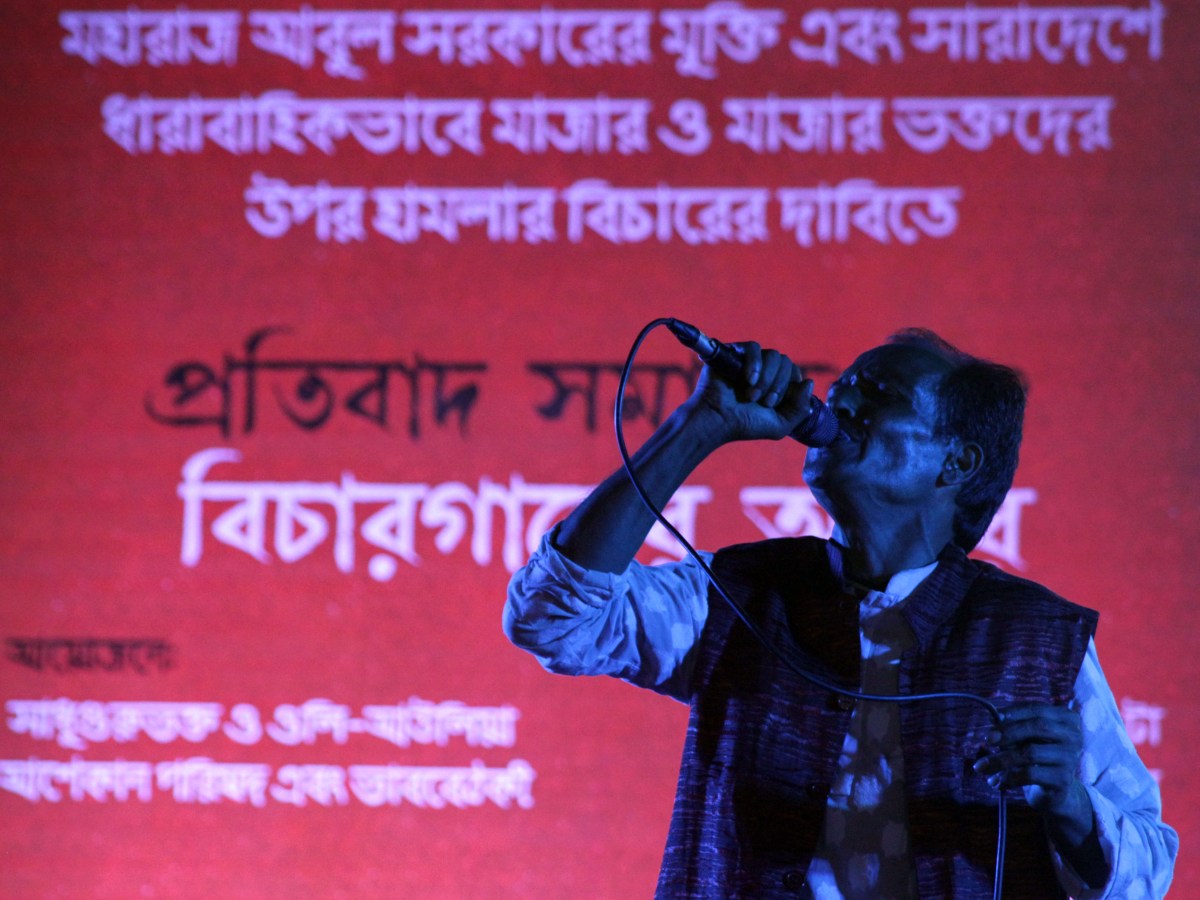
Further complicating the cultural landscape is the ongoing detention of Abul Sarkar, President of the Bangladesh Baul Association and a legendary folk singer. Sarkar has been imprisoned without trial since November on charges of “hurting religious sentiments.”
Analysts and practitioners told One-man Newsroom that Sarkar’s imprisonment, coupled with the administrative shutdowns of traditional fairs, is perceived as a psychological assault on folk philosophy, creating a climate of profound insecurity for the country’s Baul and Sufi communities.
Bailable Charges, Infinite Wait: Why the Baul Leader Remains Behind Bars
Inside the battle over folk spirituality in Bangladesh.
 One-man Newsroom
Leave a comment